

Tarsah Threads.
Discover the art of cotton craftsmanship, the vibrance of colors, and the elegance of fashion. Dive into exclusive stories, timeless styles, and the journey of high-quality garments.
What a “Made In” Label Actually Tells You
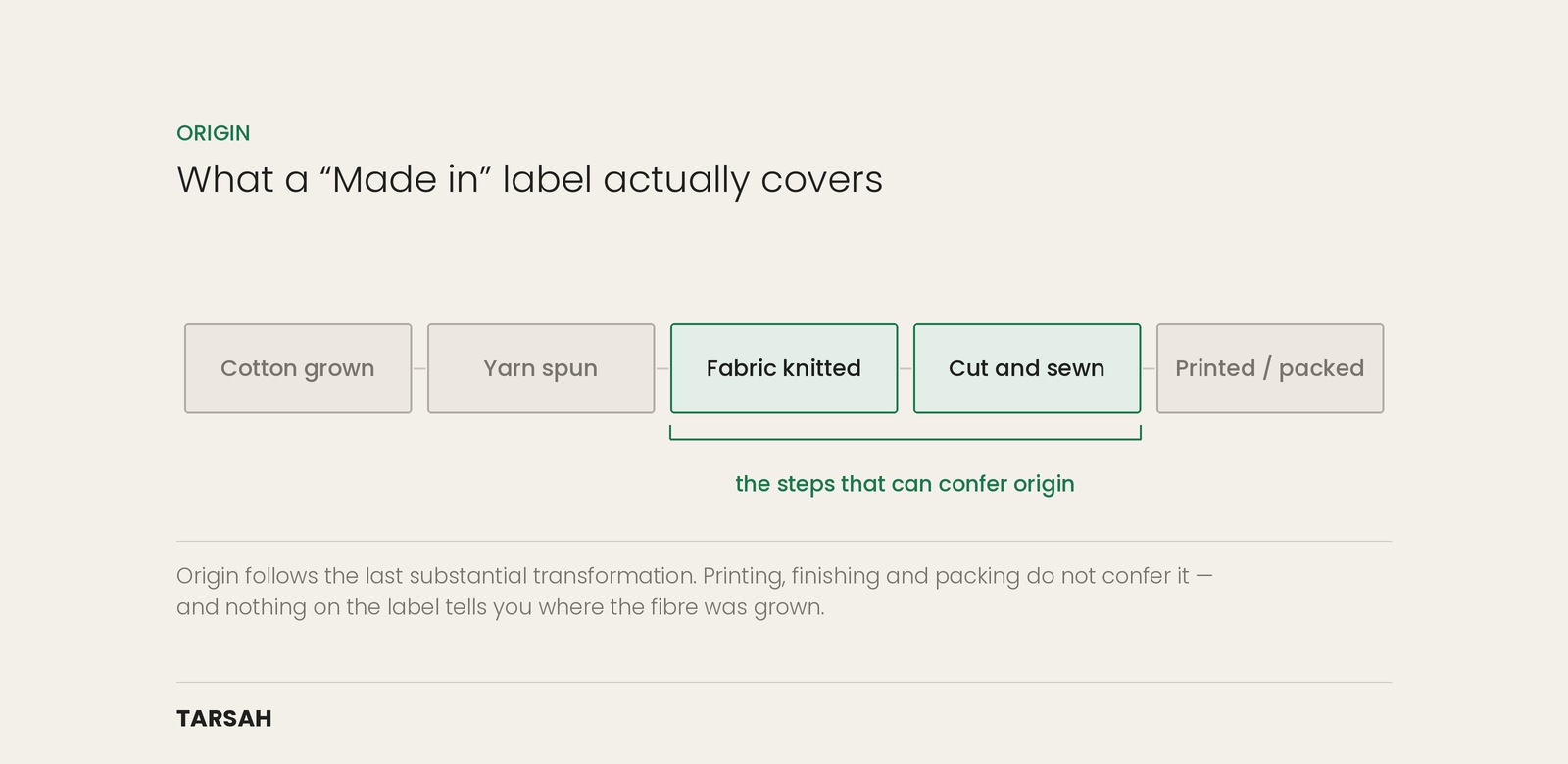
Country of origin is one of the few pieces of hard information on a garment label, and it is routinely read as more than it says.
It is not a statement about where the cotton grew, where the yarn was spun, or who was paid what. It answers a narrower question than most people assume.
Why the Tee Looks Different on You Than on the Model
The shirt arrives and something is off. Same size, same colour, same shirt — but it does not sit the way it sat in the photograph, and it is hard to say exactly why.
Usually nothing has gone wrong. A product photograph is a controlled image of one garment on one body, and almost every variable in it is different from yours.
Ring-Spun vs Open-End: Why Two Cotton Tees Feel Different
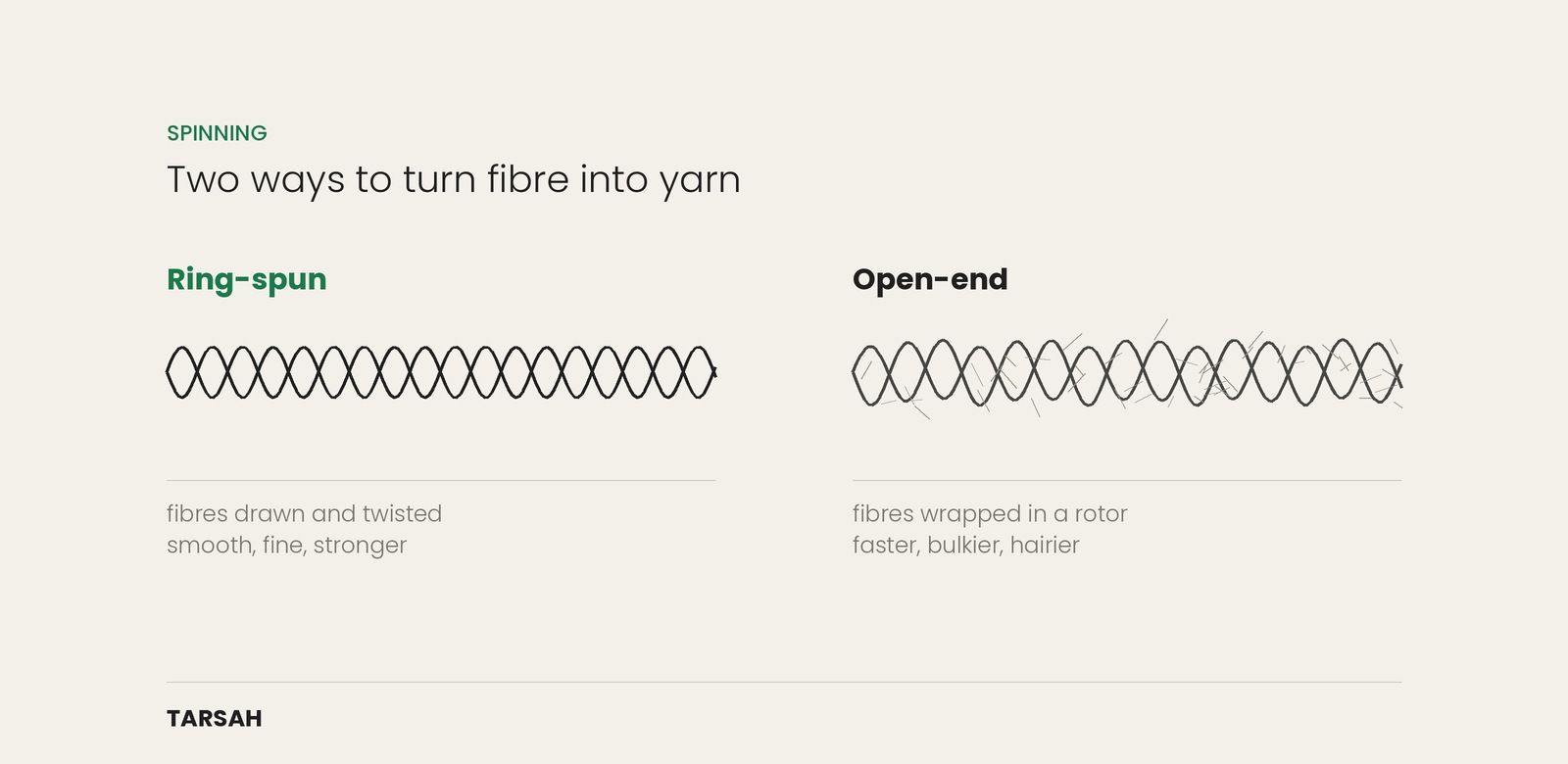
"100% ring-spun cotton" turns up on a lot of hangtags, usually with no explanation attached. It is not marketing garnish. It describes how the cotton was turned into thread, and it is the reason two shirts with identical fibre and identical weight can feel nothing alike.
There are two dominant ways to spin cotton, and the choice is almost always about speed.
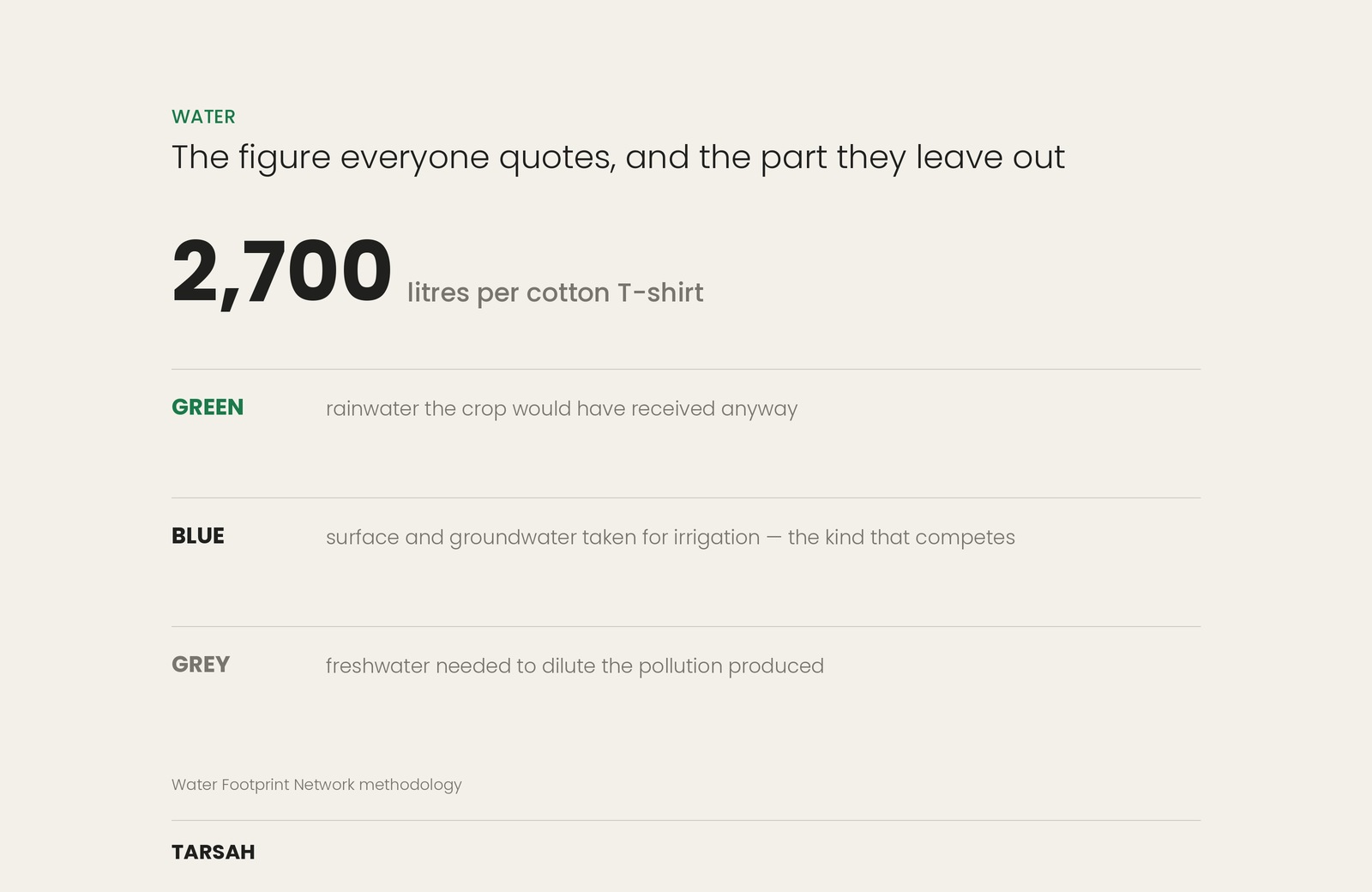
The 2,700-Litre T-Shirt: What That Number Actually Measures
You have probably seen the statistic. One cotton T-shirt takes around 2,700 litres of water to produce — about what a person drinks in two and a half years.
It is a real figure from real research, and it is used badly almost every time it appears. The number is not wrong. It is just doing less work than people think.
Where a T-Shirt Hem Should Actually Sit
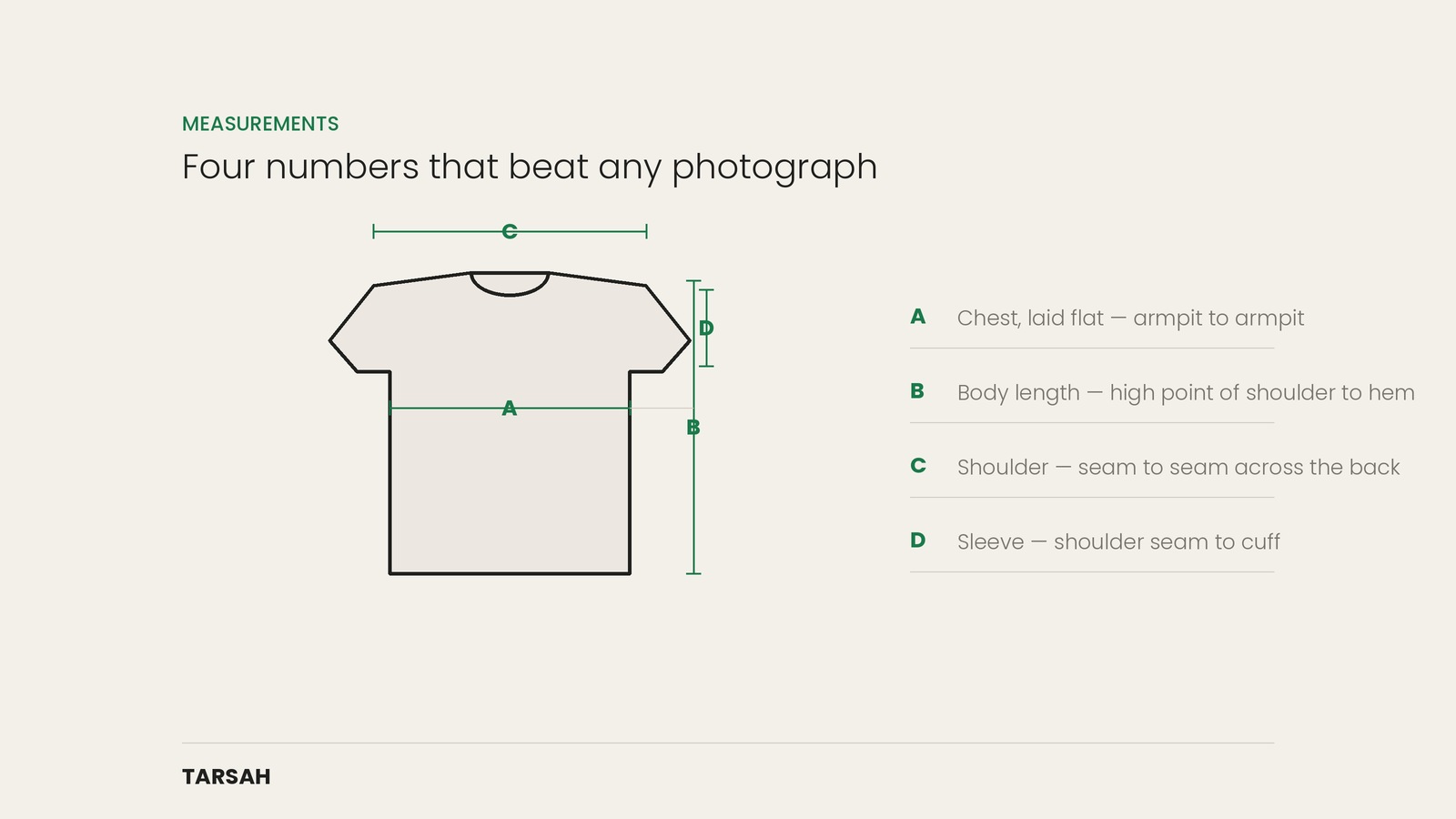
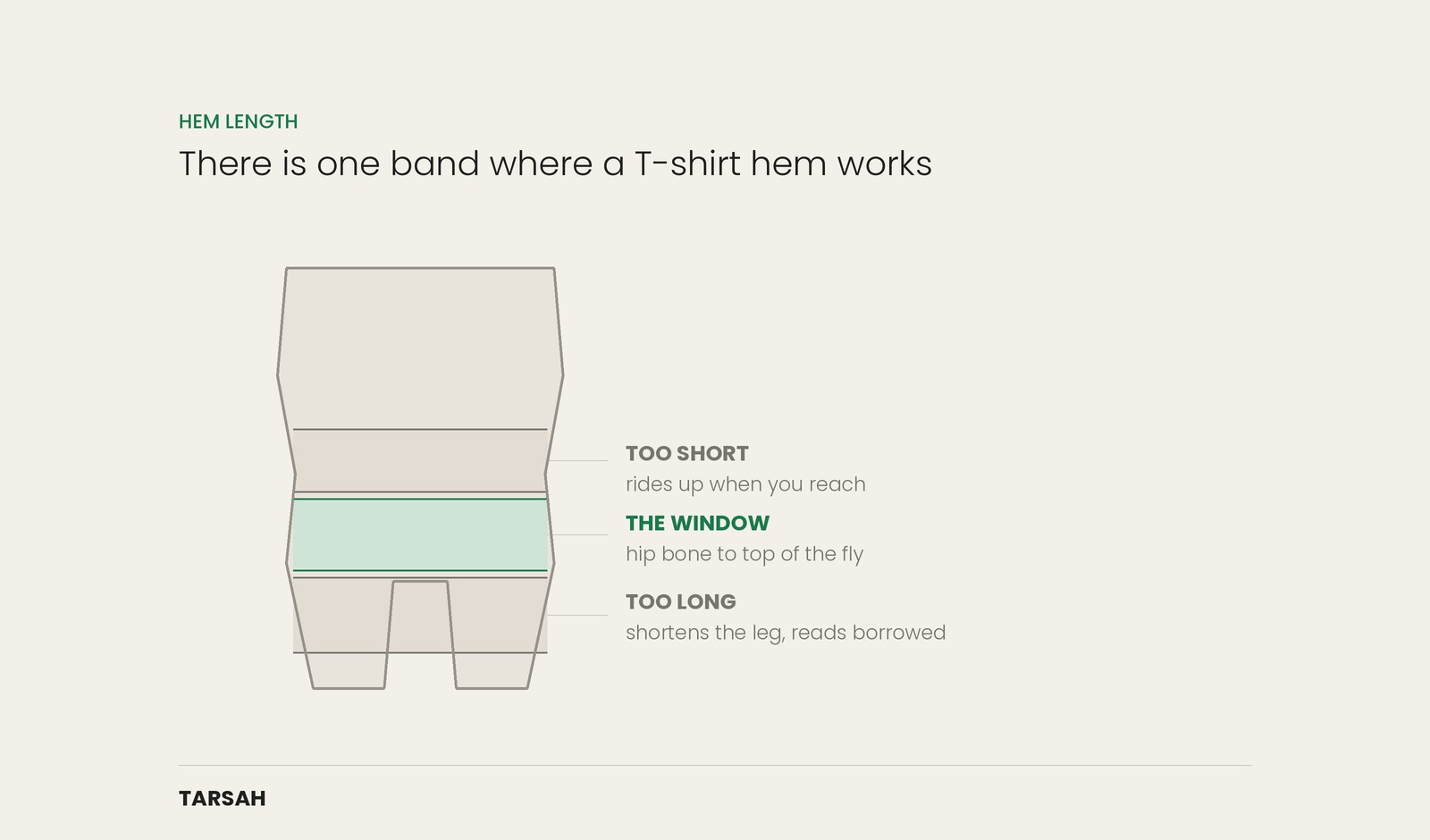
Fit conversations always go to the chest and the shoulders. But the measurement people get wrong most often is body length, and it is the one that decides whether a tee looks like it belongs to you.
There is a fairly narrow band where a hem works, and it is defined by landmarks on your body rather than by a number on a size chart.
Five Questions Worth Asking a Clothing Brand
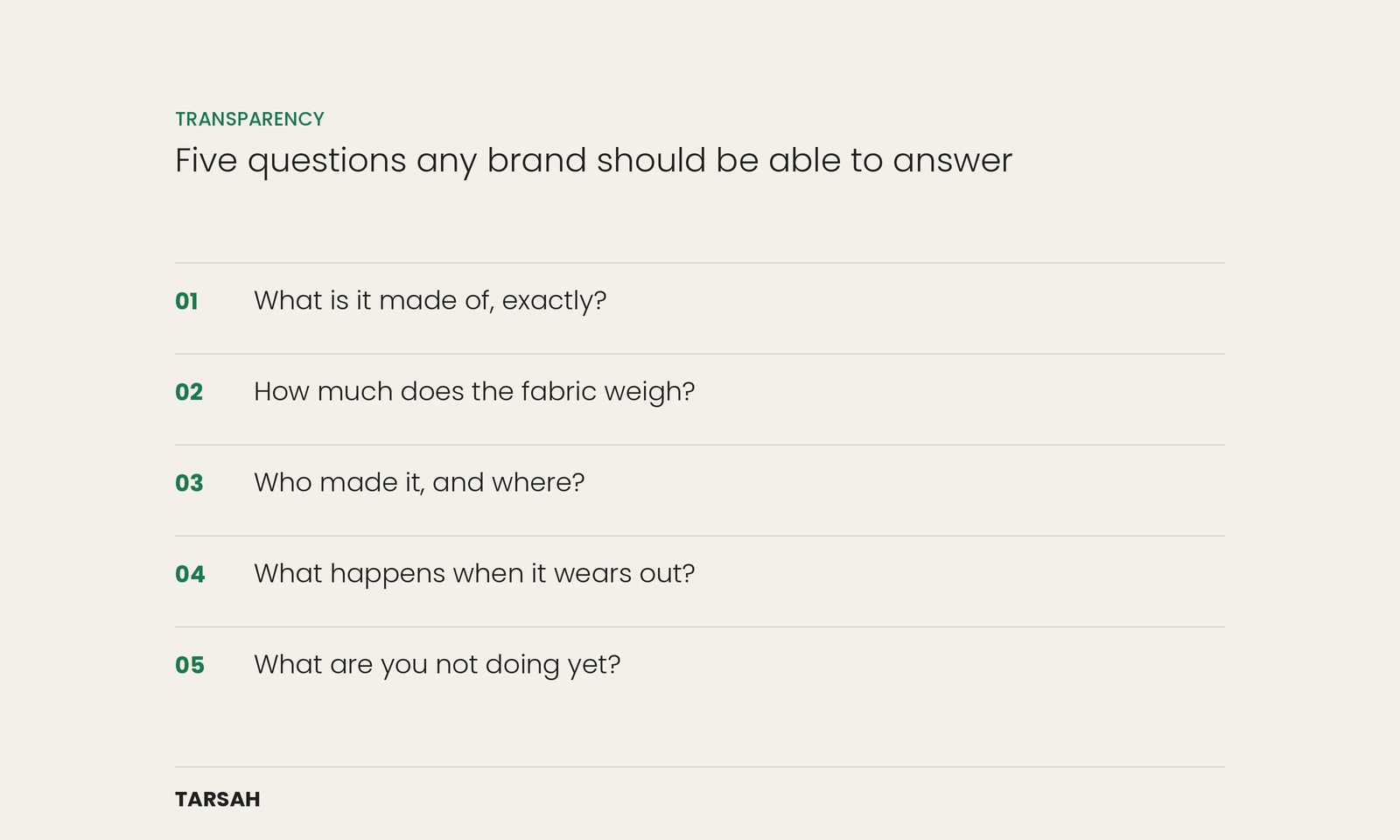
"Sustainable" is not a regulated word. Neither is "conscious", "responsible", "eco" or "mindfully made". Any brand can print any of them on any garment, and most do.
What cannot be faked is a specific answer to a specific question. Here are five worth asking — including of us.
Single Jersey, Rib and Interlock: The Knit Under Your T-Shirt
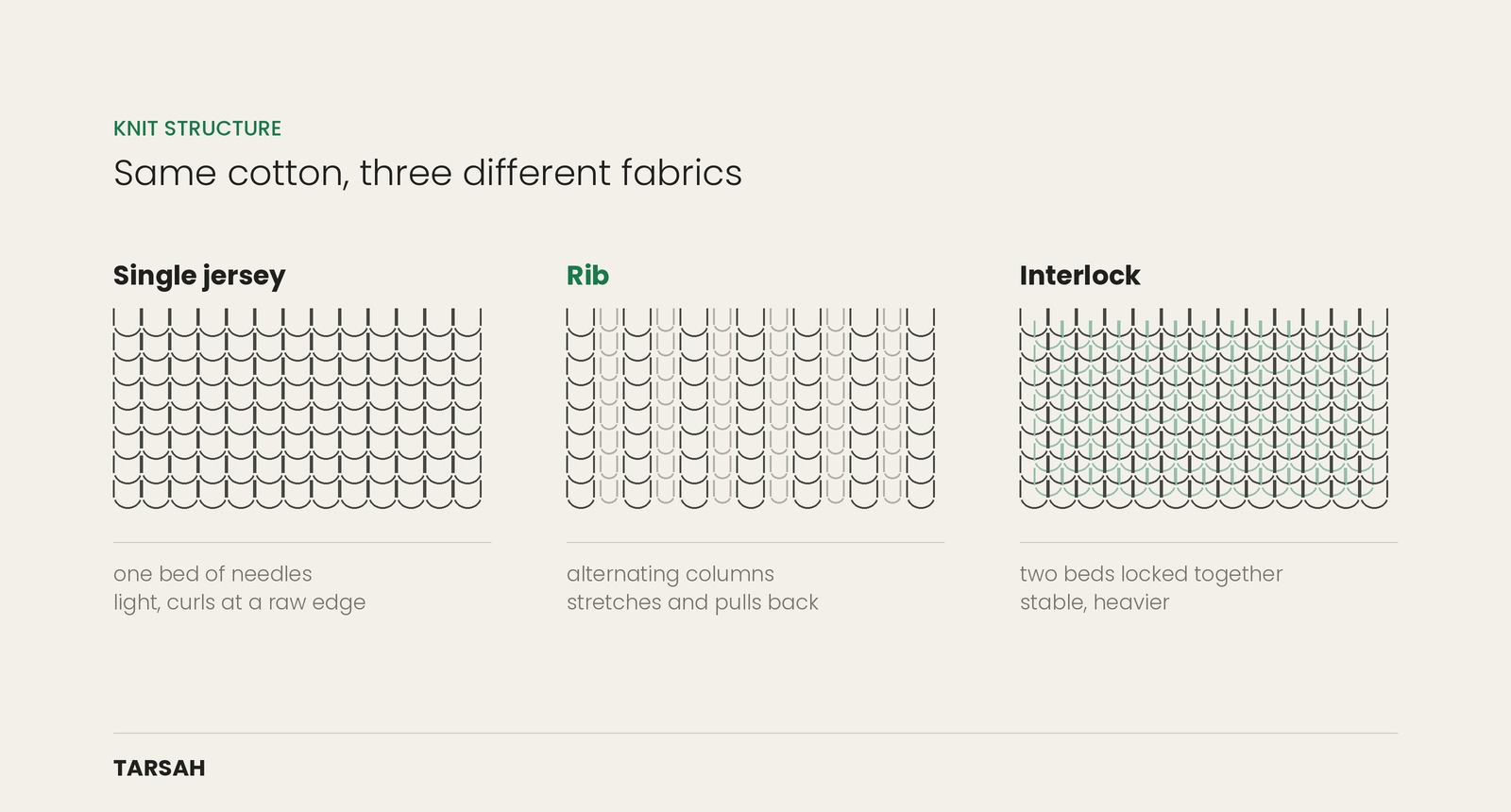
Two shirts can be the same cotton, the same fibre length and the same weight on the label, and still feel like different garments in the hand.
What separates them is structure. Knitting is a way of building fabric out of loops, and the pattern of those loops decides almost everything about how the finished shirt behaves.
How to Layer a T-Shirt Without Looking Bulky
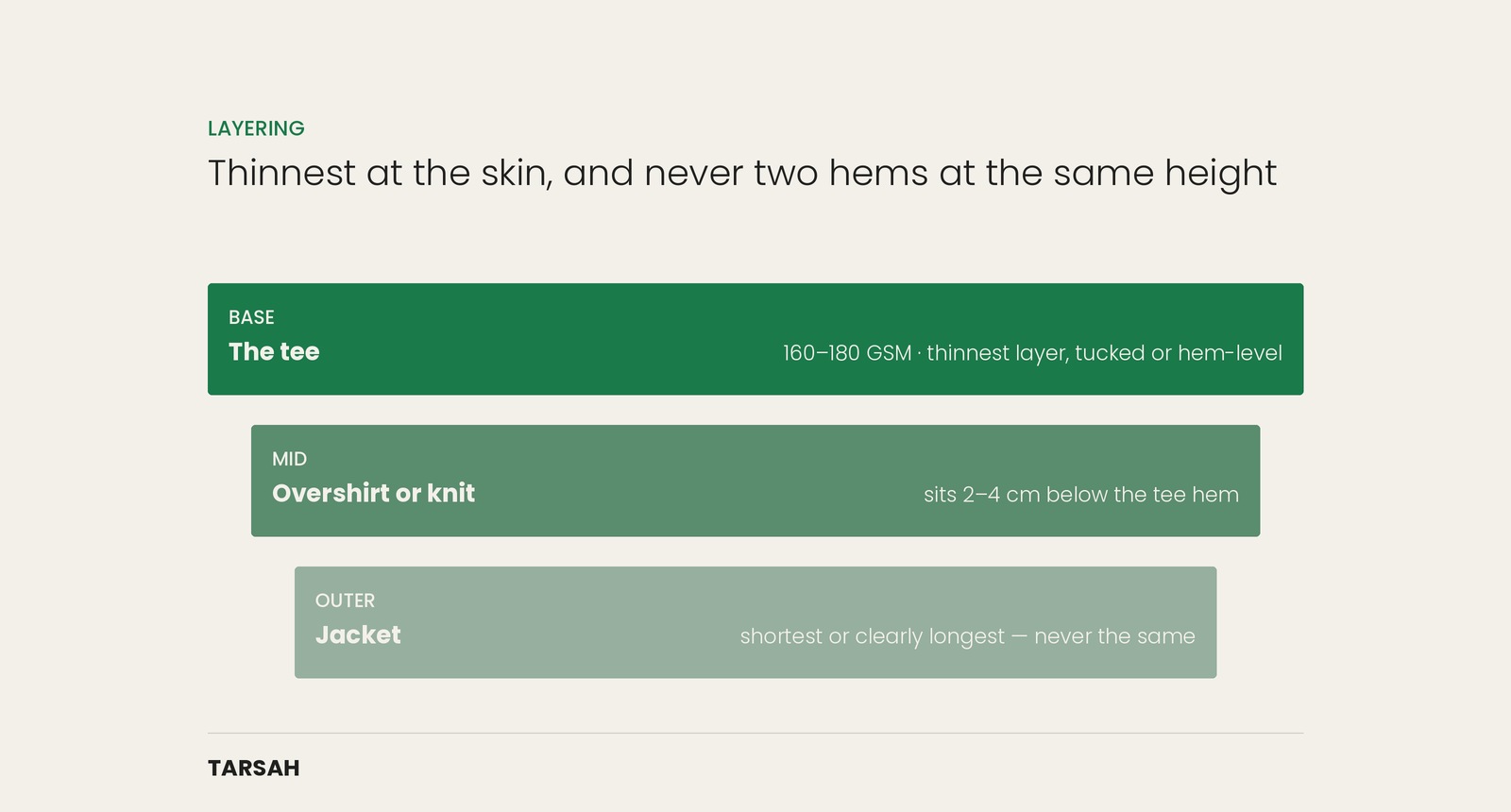
Layering is what gets a summer wardrobe through autumn. Done badly it just makes you look wider, with a shirt bunching under a jacket and two hems fighting over the same three centimetres.
The fixes are mostly mechanical. It is about thickness and length, not about taste.
Why Collars Stretch Out, and How to Stop It
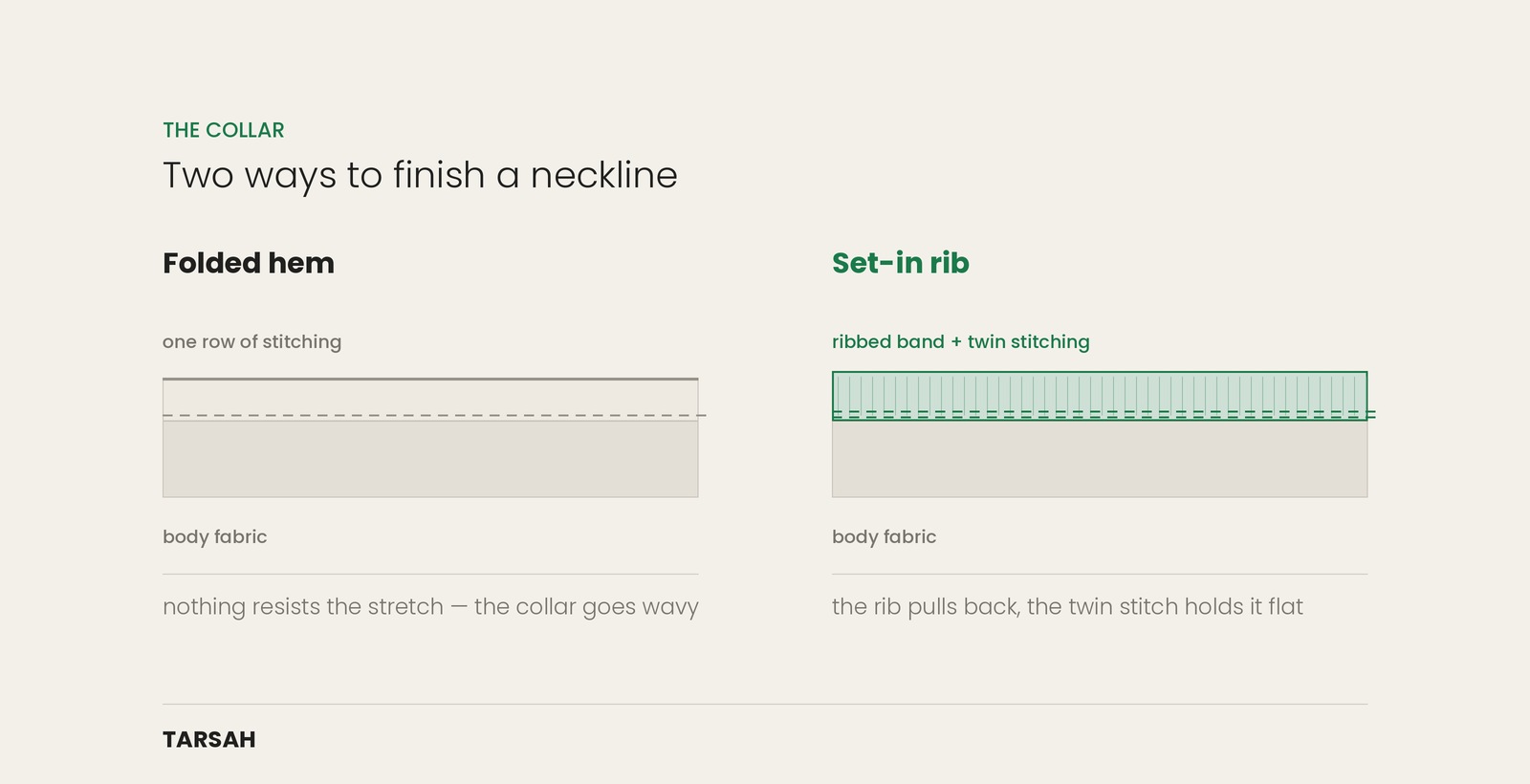
The body of the shirt is fine. The colour is fine. But the collar has gone soft and wavy, sits away from your neck, and the whole thing now reads as an old T-shirt.
Collars are the first thing to fail on most tees, and the reason is almost always construction rather than abuse.
Where Your Old T-Shirts Actually Go
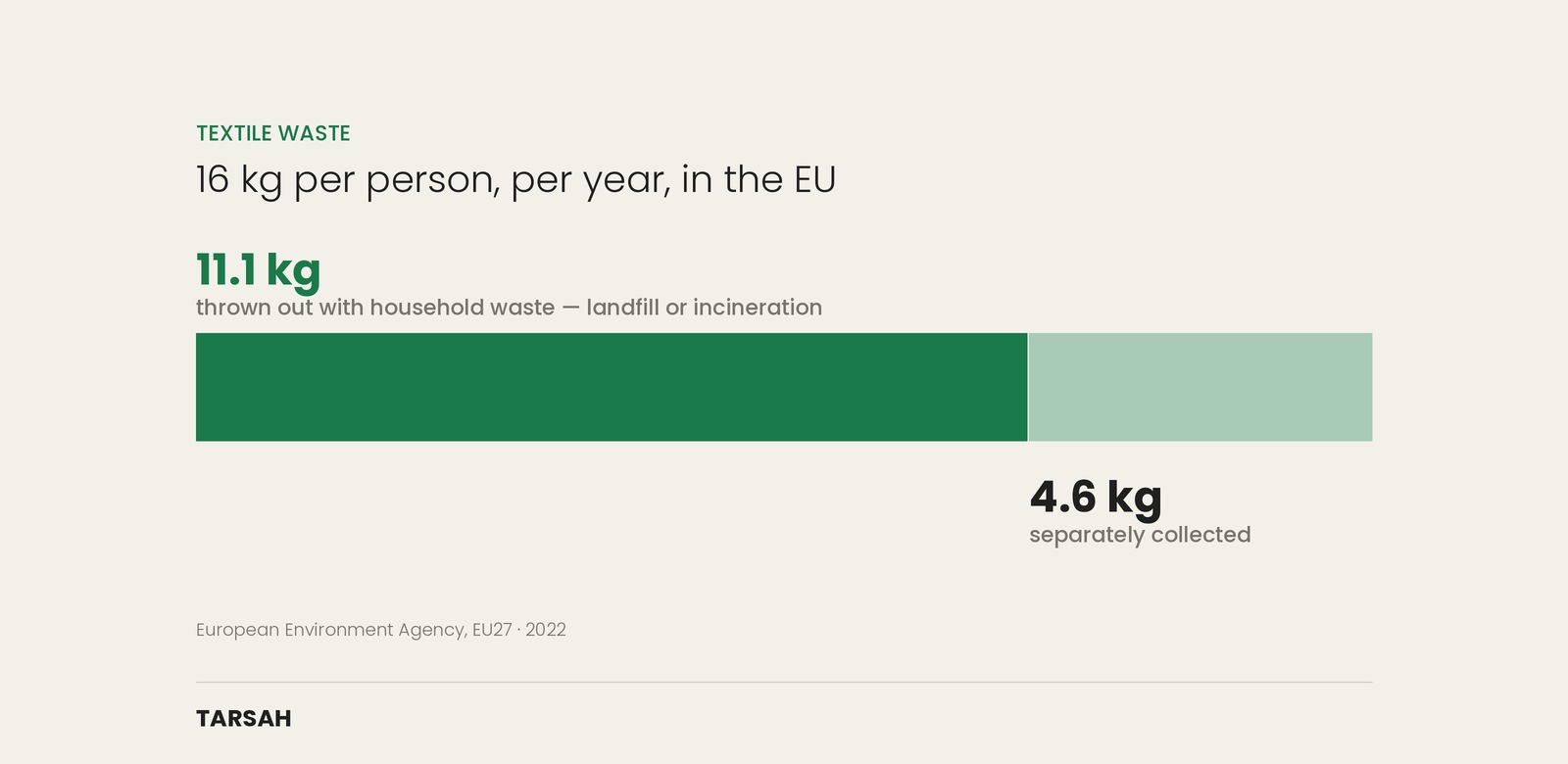
You put the bag by the door with good intentions. Four shirts you have not worn in two years, off to the collection bin, and a small clean feeling on the walk home.
What happens after that is mostly invisible, and it is not what most people picture.