

Ethical Fashion
What a “Made In” Label Actually Tells You
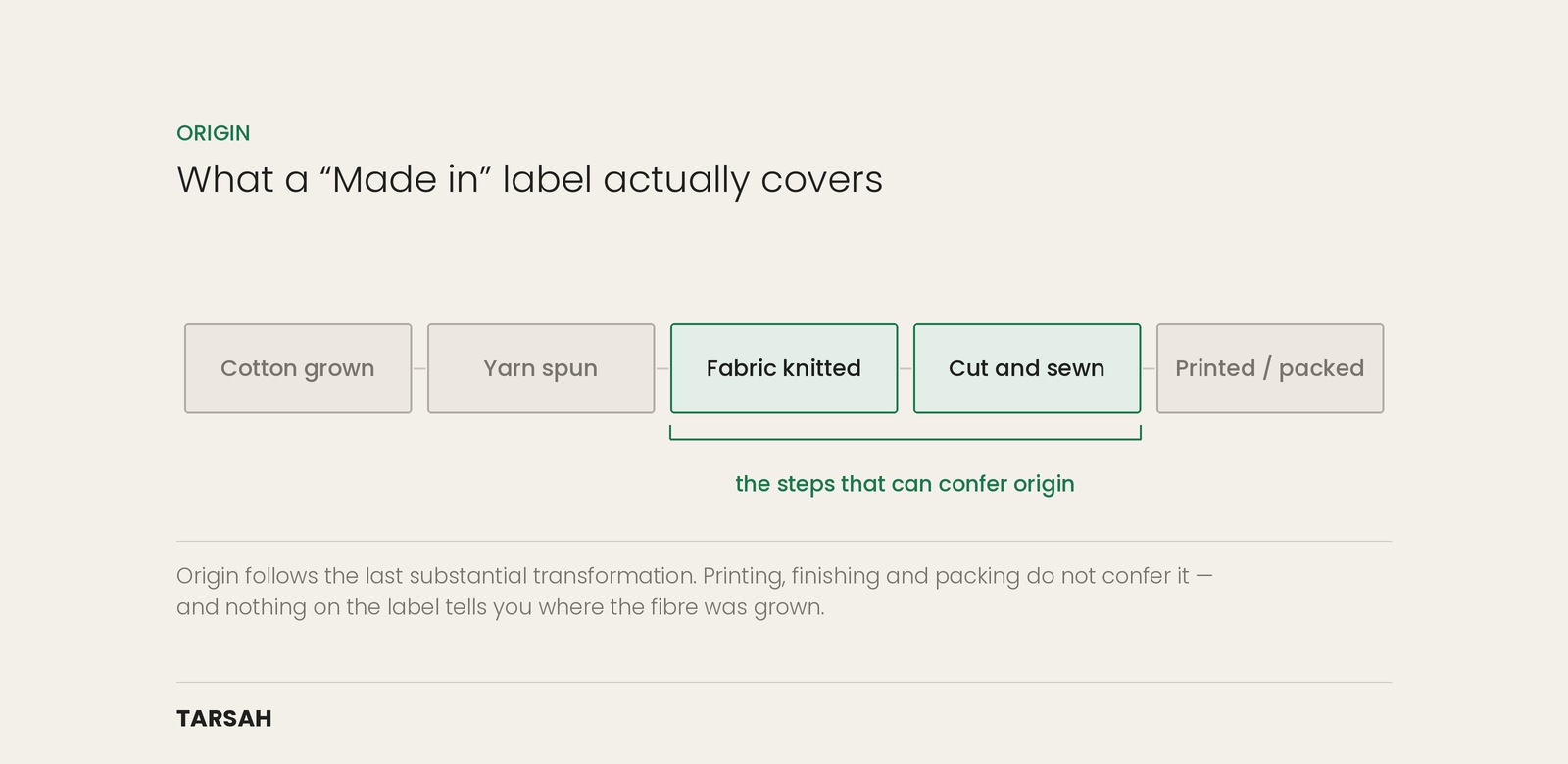
Country of origin is one of the few pieces of hard information on a garment label, and it is routinely read as more than it says.
It is not a statement about where the cotton grew, where the yarn was spun, or who was paid what. It answers a narrower question than most people assume.
The 2,700-Litre T-Shirt: What That Number Actually Measures
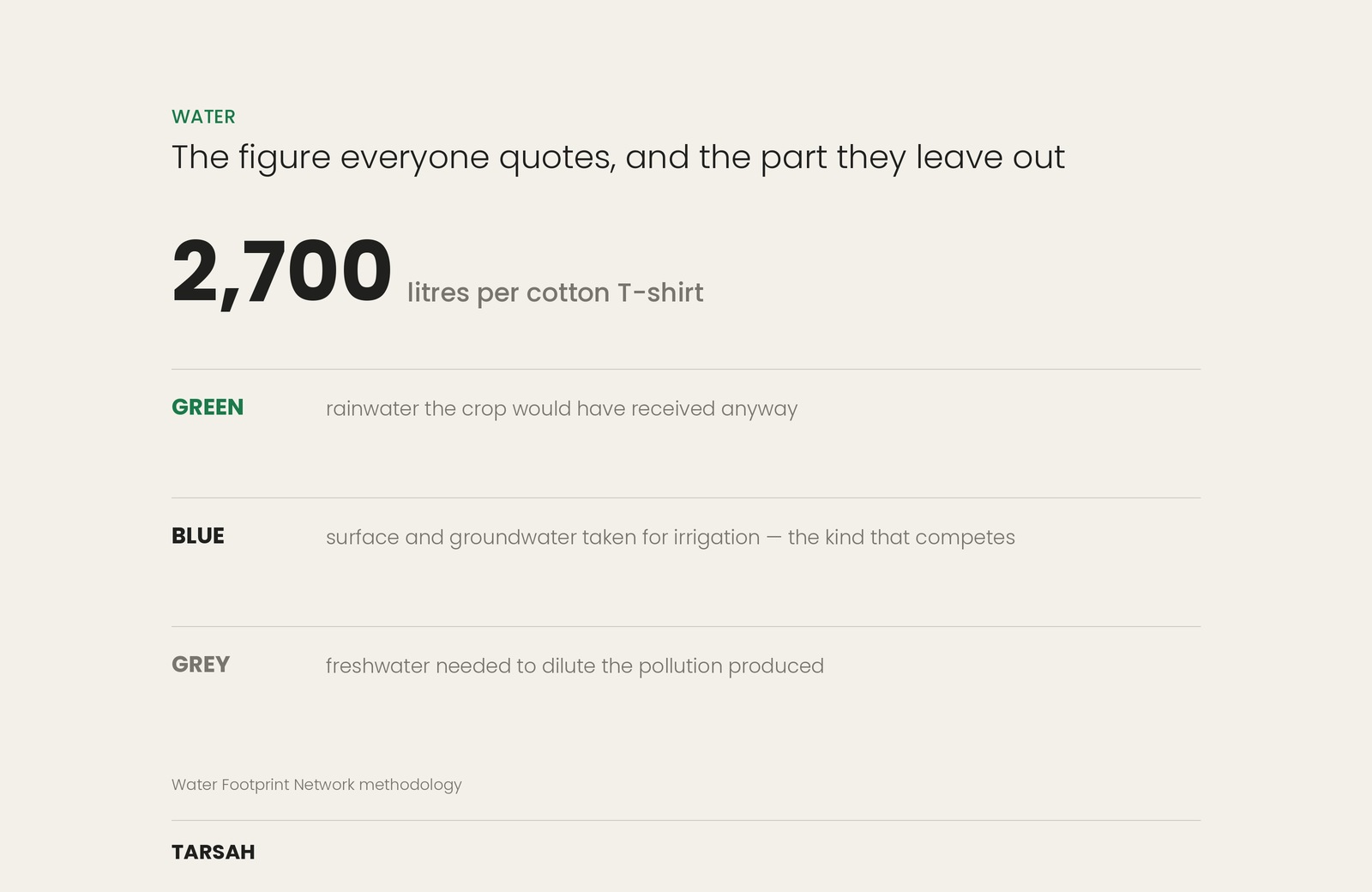
You have probably seen the statistic. One cotton T-shirt takes around 2,700 litres of water to produce — about what a person drinks in two and a half years.
It is a real figure from real research, and it is used badly almost every time it appears. The number is not wrong. It is just doing less work than people think.
Five Questions Worth Asking a Clothing Brand
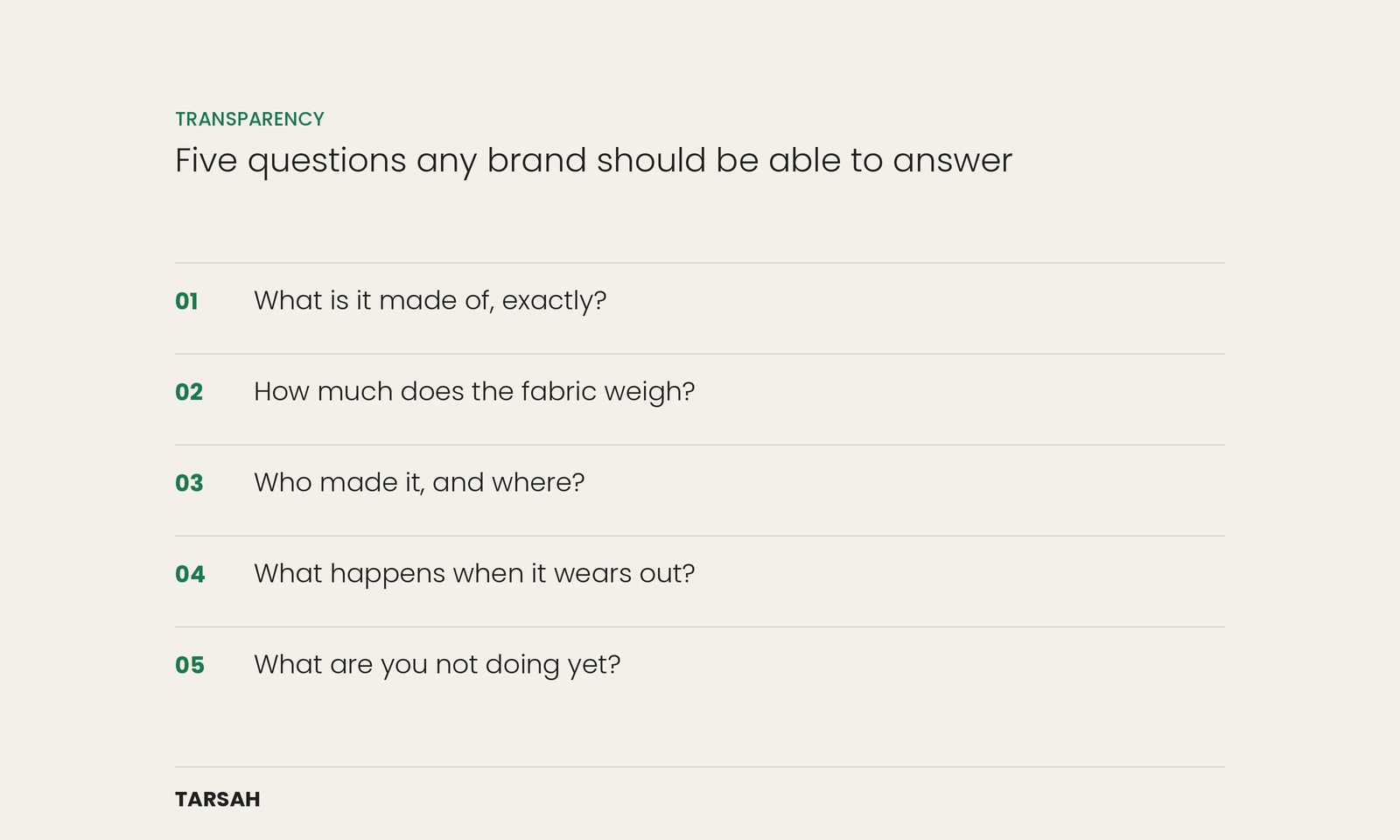
"Sustainable" is not a regulated word. Neither is "conscious", "responsible", "eco" or "mindfully made". Any brand can print any of them on any garment, and most do.
What cannot be faked is a specific answer to a specific question. Here are five worth asking — including of us.
Where Your Old T-Shirts Actually Go
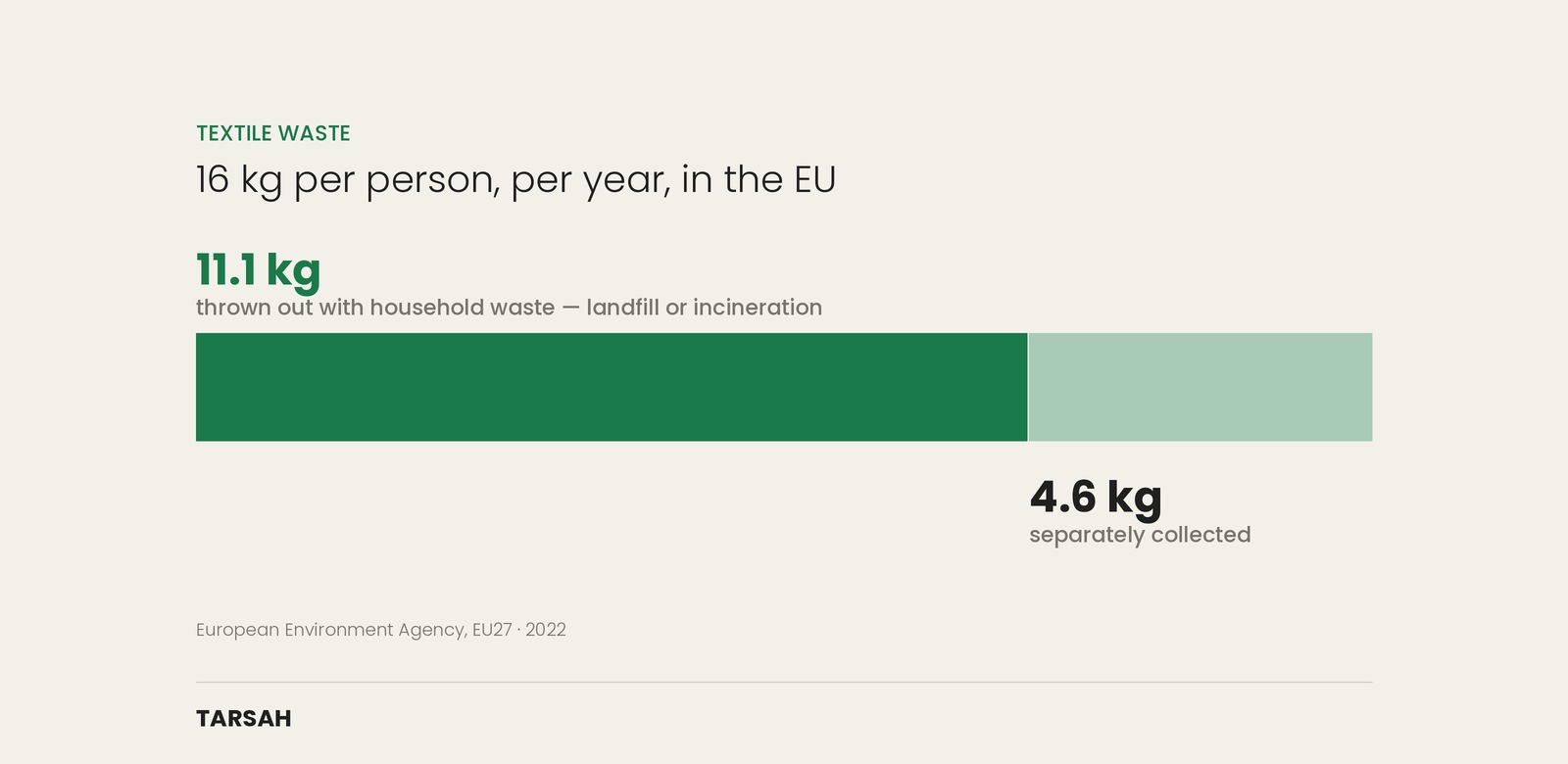
You put the bag by the door with good intentions. Four shirts you have not worn in two years, off to the collection bin, and a small clean feeling on the walk home.
What happens after that is mostly invisible, and it is not what most people picture.
Microplastics From Your Laundry, Explained
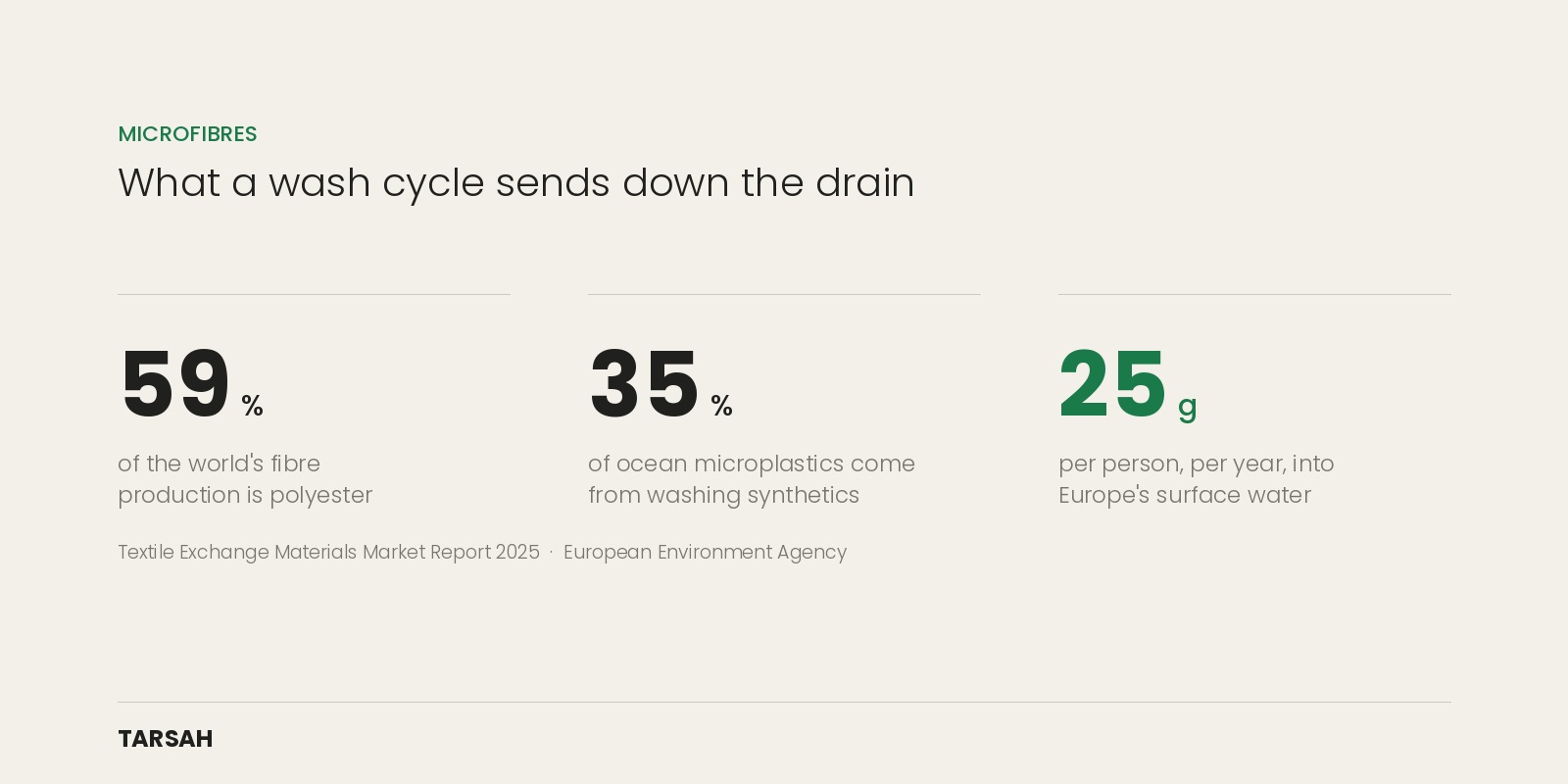
Clothes shed. Every wash pulls loose fibres off the surface of a garment and sends them down the drain — that part is unavoidable, and it has always happened.
What has changed is what the fibres are made of.
Cost Per Wear: The Only Clothing Maths That Matters
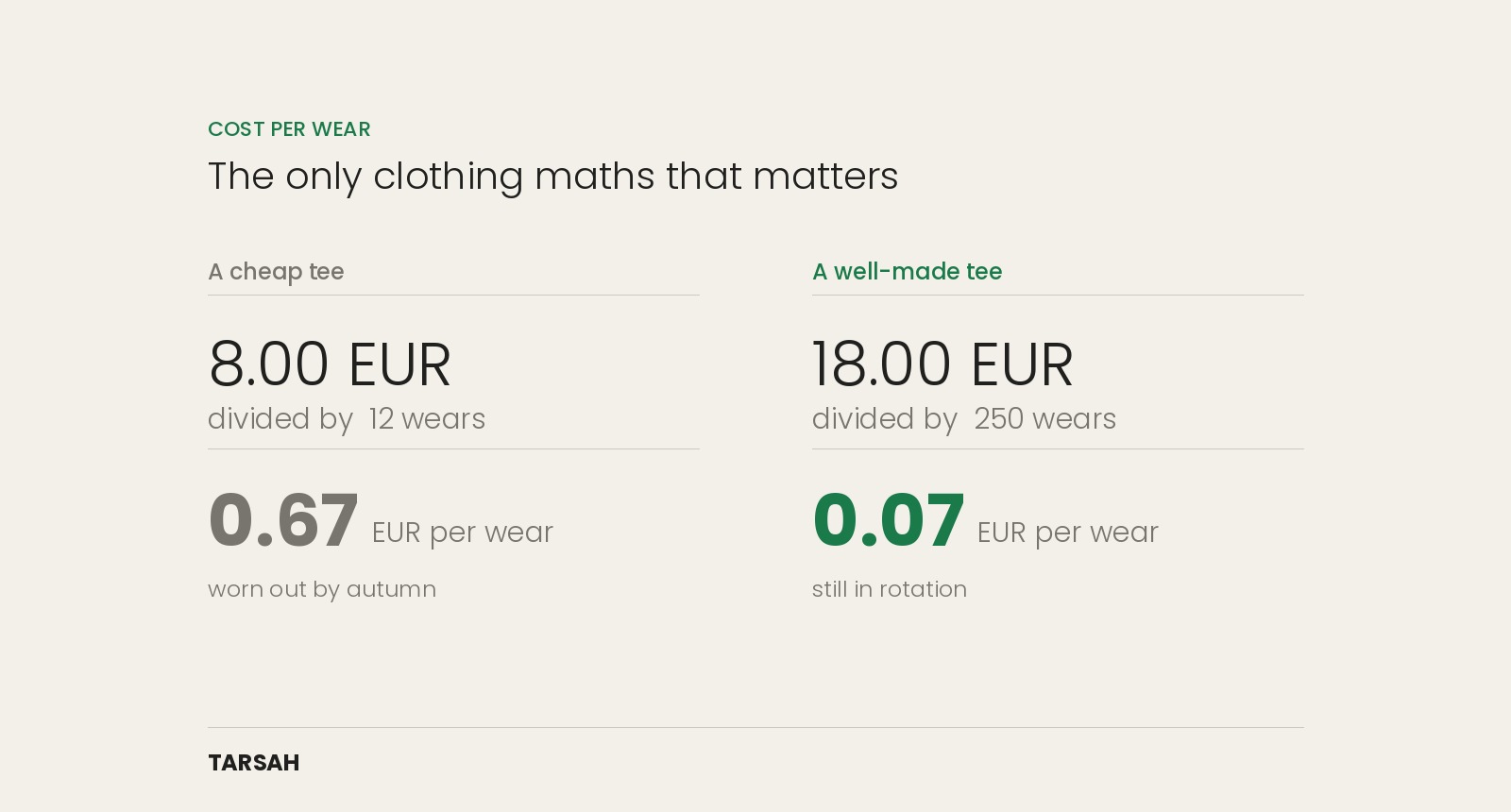
An 8-euro T-shirt feels like a bargain right up until you count how many times you actually wore it.
There is one number that tells you more about a garment than its price tag, and almost nobody runs it. Divide what you paid by the number of times you wore it. That is cost per wear, and it quietly reorders your entire wardrobe.