

Why the label word tells you nothing
Marketing language is cheap to produce and impossible to check. A claim like "consciously sourced" has no legal definition, no auditor and no consequence for being untrue.
Specifics behave differently. A number can be wrong, and being caught being wrong costs something. So the useful test is not whether a brand sounds responsible — it is whether it will commit to anything falsifiable.
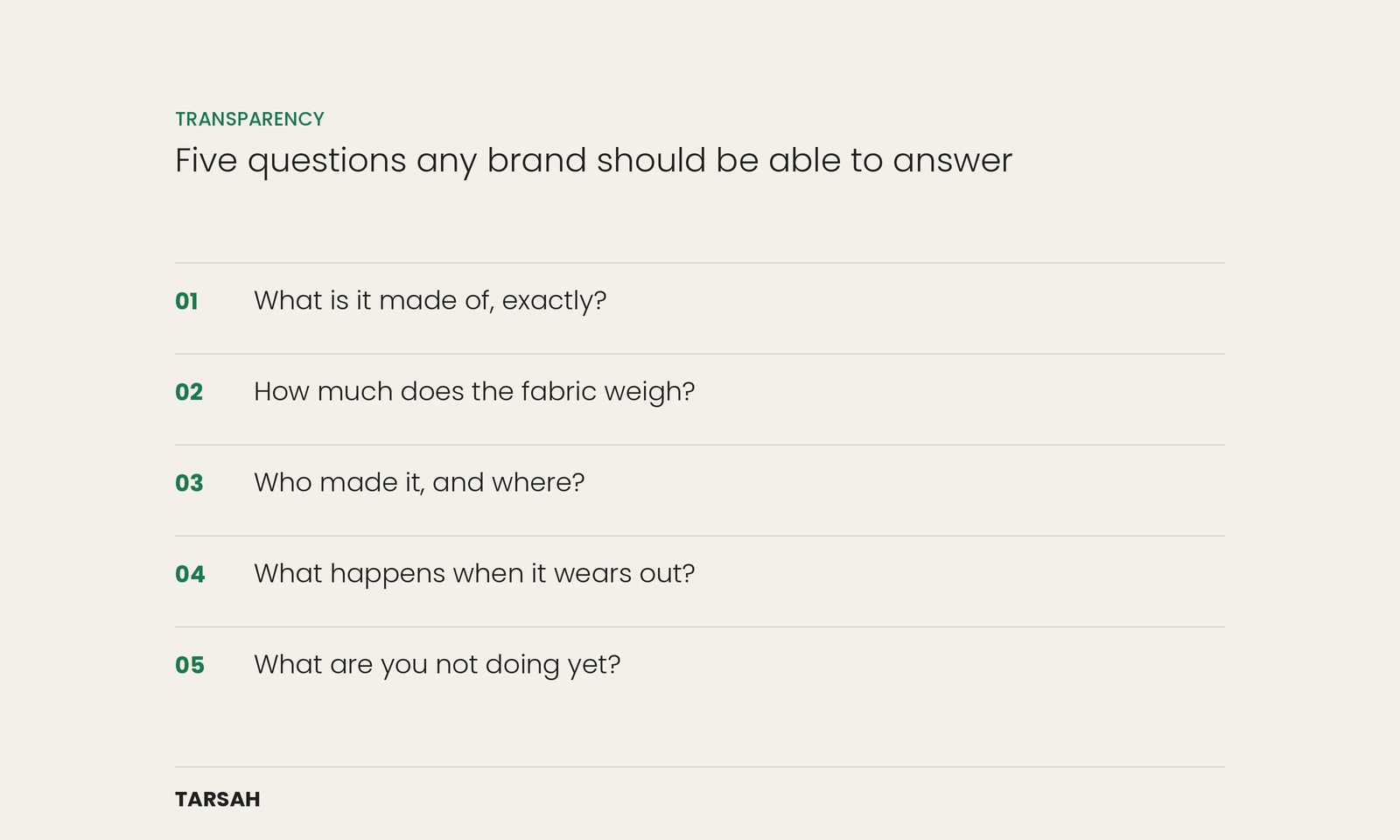
The five questions
- What is it made of, exactly? Not "natural fibres" — percentages. A blend is a different product with a different life span.
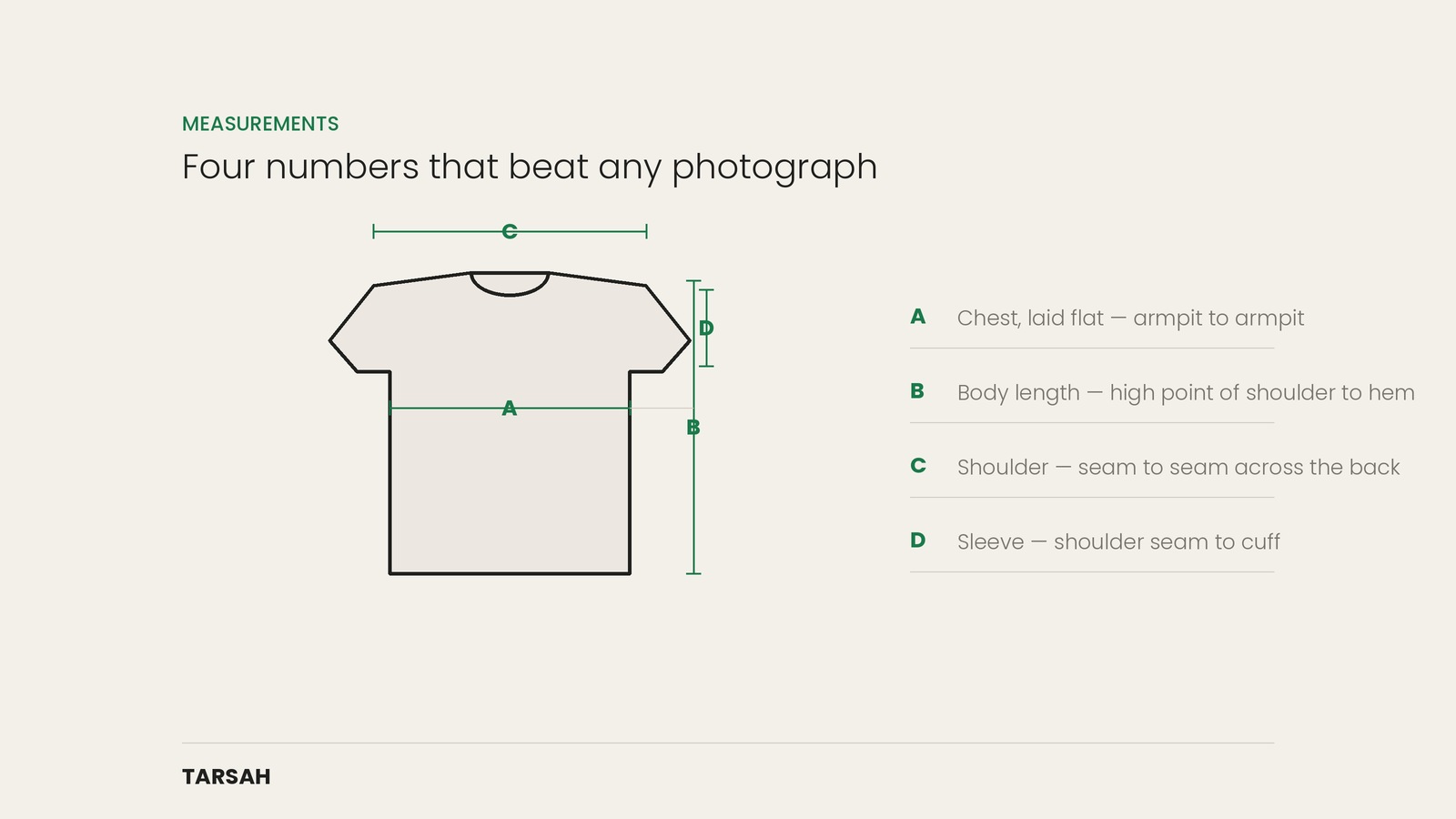
- How much does the fabric weigh? GSM is the most basic spec in knitwear and the easiest to publish. Silence usually means it is low.
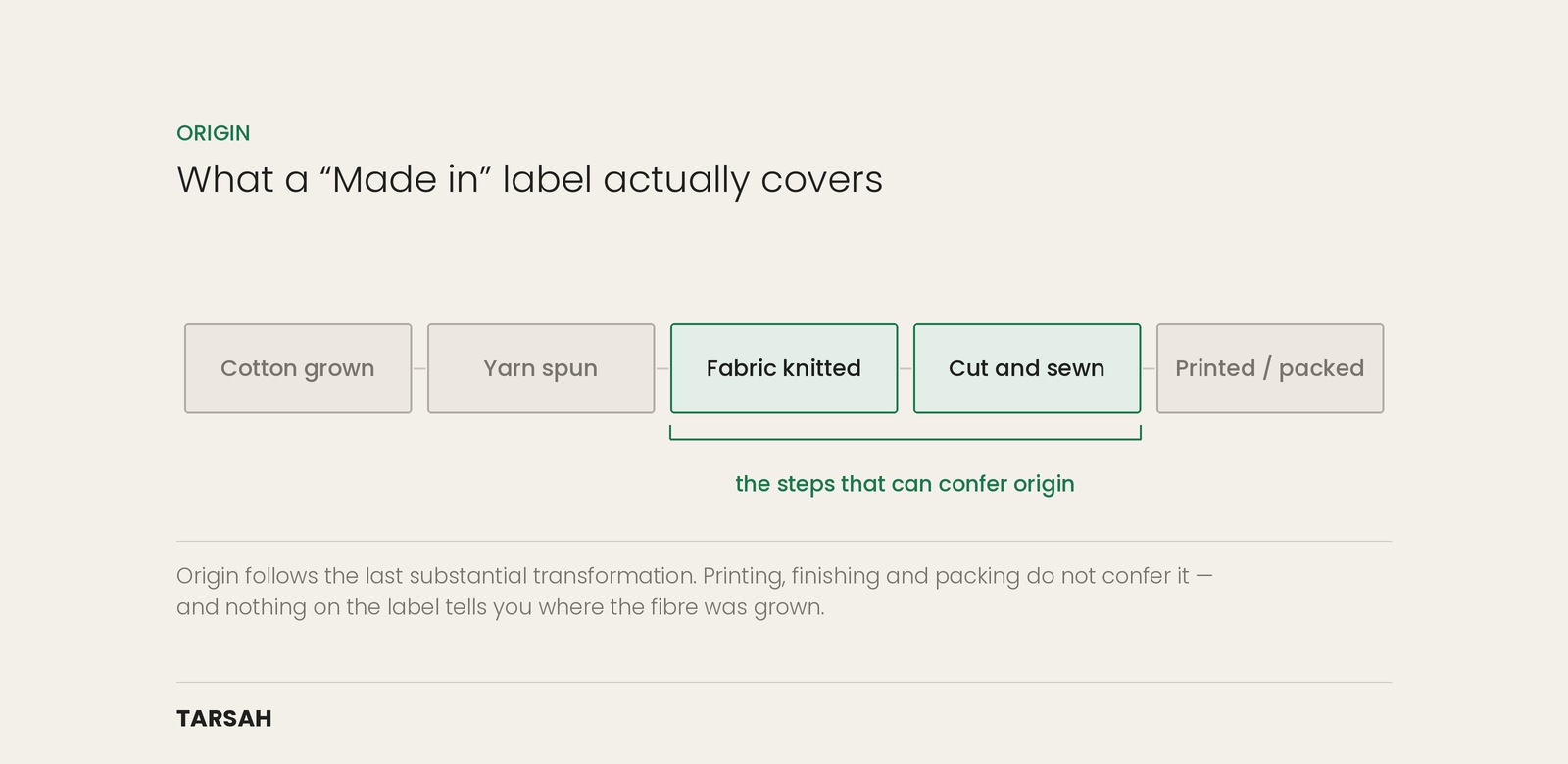
- Who made it, and where? Country at minimum. Named factories or partners is better.
- What happens when it wears out? A brand that has thought about end of life will have an actual answer, not a recycling logo.
- What are you not doing yet? The most revealing of the five. Everyone has gaps. Only some will name them.
What a straight answer sounds like
Vague: "We use premium sustainable materials sourced from trusted partners."
Straight: "180 GSM single jersey, 100% cotton, knitted and cut in Alexandria, no elastane. We do not currently publish our dyehouse."
The second one is checkable, and the last sentence is what makes it credible. A brand willing to state a limit is a brand that is probably telling the truth about the rest.
Our answers, as of today
Fair is fair, so here are ours.
Everything we make is 100% cotton, made in Egypt, with no polyester and no elastane. We work with mid-sized Egyptian factories and we are moving all collections to plastic-free packaging. We publish three commitments openly: plastic-free 100% cotton across the range, marine conservation work in the Red Sea, and a 2030 target for supplier working conditions.
Our garments are single-fibre, which keeps them a candidate for reuse and recycling rather than a mixed-material problem.
And what we cannot answer yet
The 6-hour day and 4-day week we are working towards is a 2030 target, not a description of today. We do not own our factories — we choose partners, which means we influence conditions rather than control them.
We also do not yet publish fabric weight and construction detail on every product page. Given that we just told you to ask every brand for exactly that, it is the most obvious gap on this list, and it is the one we intend to close first.
We would rather write that down than let you find it.
Ask us the five
If you want any of this in more detail, ask. The questions above work on us the same way they work on anyone else — and the answers should not require a marketing department to decode.