

Single jersey — what almost every T-shirt is
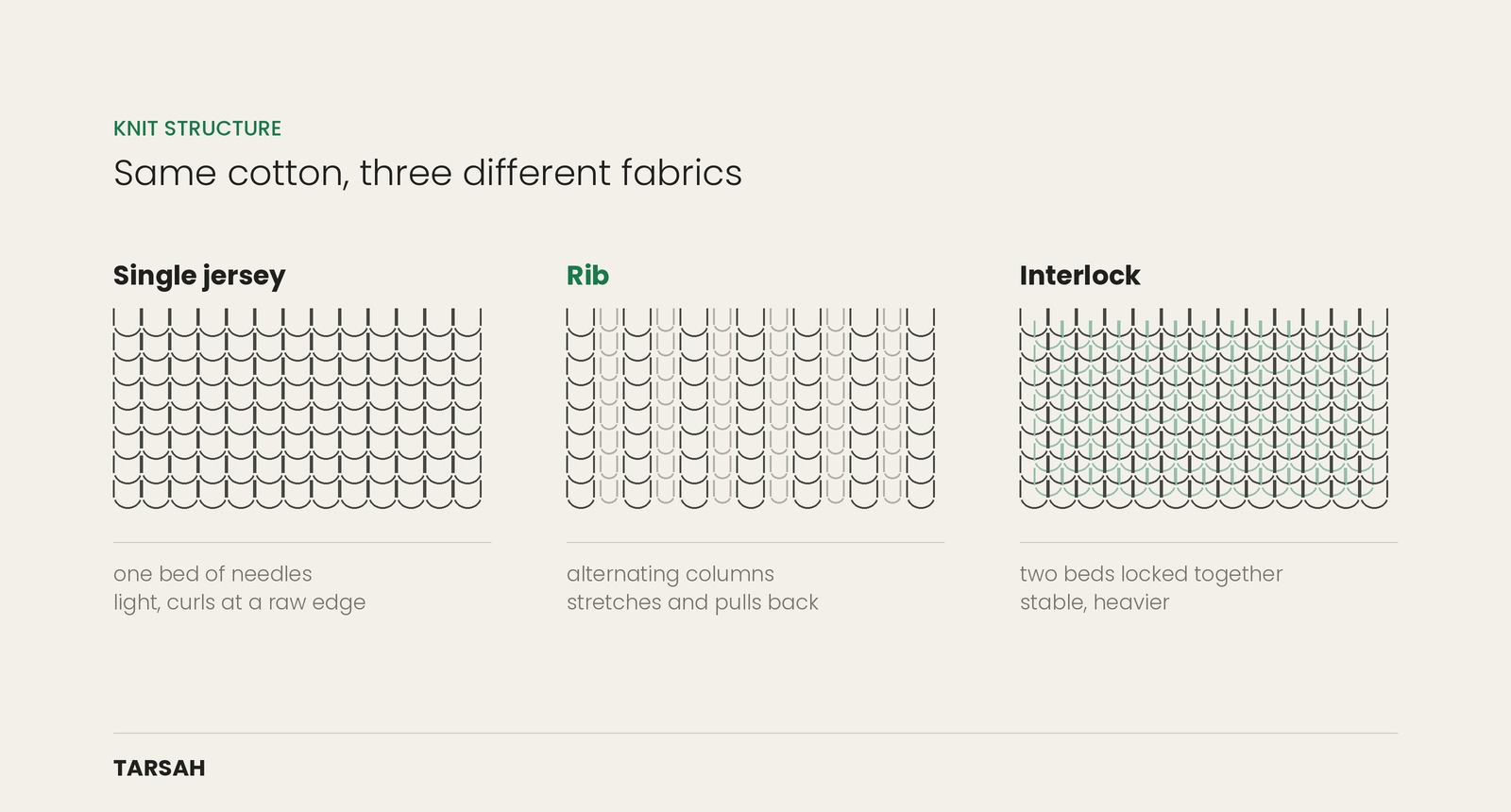
Single jersey comes off one bed of needles. Every loop is pulled through in the same direction, which gives you a smooth face and a looped, slightly textured back. That asymmetry is why you can always tell the inside of a tee from the outside.
It is light, it drapes, and it uses the least yarn — which is exactly why it is the default for T-shirt bodies. The trade-off is that a single jersey edge curls when you cut it, and the fabric has generous stretch with only modest recovery.
Rib — the one that pulls back
Rib alternates columns of loops between the front and back of the fabric, so the surface forms vertical channels. Stretch it sideways and those channels open; let go and they close.
That is real recovery, not just stretch, and it is why ribbing exists on the parts of a garment that get pulled: collars, cuffs, waistbands. It is the whole reason a set-in ribbed collar survives where a folded hem of body jersey does not.
Interlock — two fabrics locked together
Interlock is effectively two single jerseys knitted simultaneously and interlocked, loop for loop. Both faces look like the smooth side.
What you get is stability. It resists curling, holds its shape, and feels denser and more substantial in the hand at the same nominal weight. What you give up is breathability and cost — it takes roughly twice the yarn and slower machine time, which is why you see it in polo shirts and premium basics rather than everyday tees.
How to identify them in thirty seconds
You do not need a loupe. You need the hem and a bit of light.
- Look at both faces. Different front and back means single jersey. Identical faces means interlock.
- Find a raw or cut edge. Single jersey curls toward the face. Interlock lies flat.
- Stretch it sideways, then release. If it snaps back crisply, you are holding rib.
- Compare weight to thickness. Interlock feels heavier than it looks; single jersey feels lighter.
This matters because structure and weight are independent. A 180 GSM interlock and a 180 GSM single jersey are genuinely different fabrics.
Where Tarsah lands
The Grand Tee is built the way a T-shirt should be — a light single jersey body that drapes and breathes, with a ribbed collar, twin-stitched, so the one part of the garment that takes real strain is made from the structure designed to take it.
Using the right knit in the right place is not glamorous. It is just the difference between a shirt that ages and a shirt that sags.
The third number worth asking about
Fibre length, fabric weight, knit structure. Those three between them explain nearly every difference you will feel between two cotton tees — and the last one is almost never on the label.