

Fabric Weight
Ring-Spun vs Open-End: Why Two Cotton Tees Feel Different
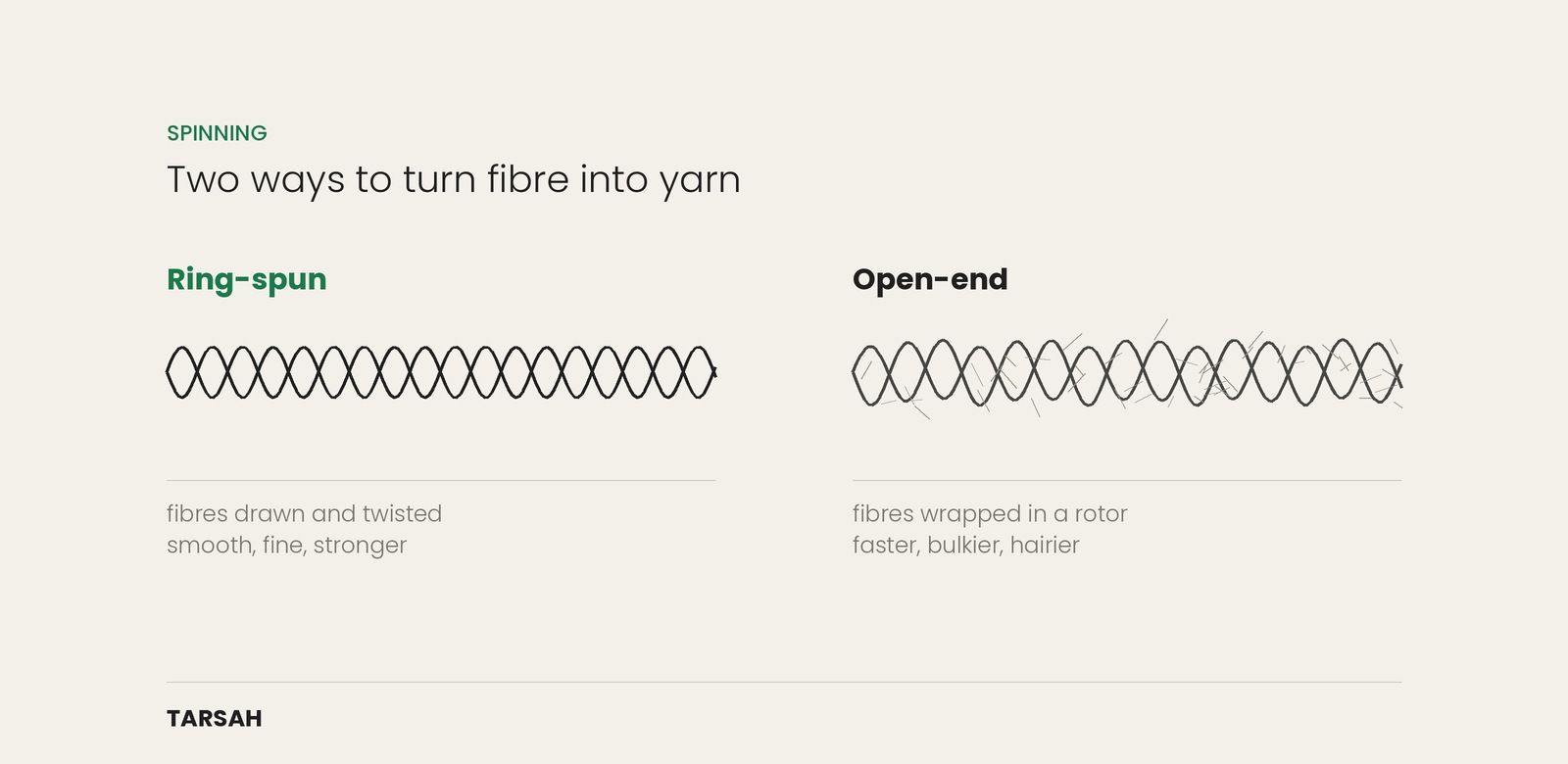
"100% ring-spun cotton" turns up on a lot of hangtags, usually with no explanation attached. It is not marketing garnish. It describes how the cotton was turned into thread, and it is the reason two shirts with identical fibre and identical weight can feel nothing alike.
There are two dominant ways to spin cotton, and the choice is almost always about speed.
Single Jersey, Rib and Interlock: The Knit Under Your T-Shirt
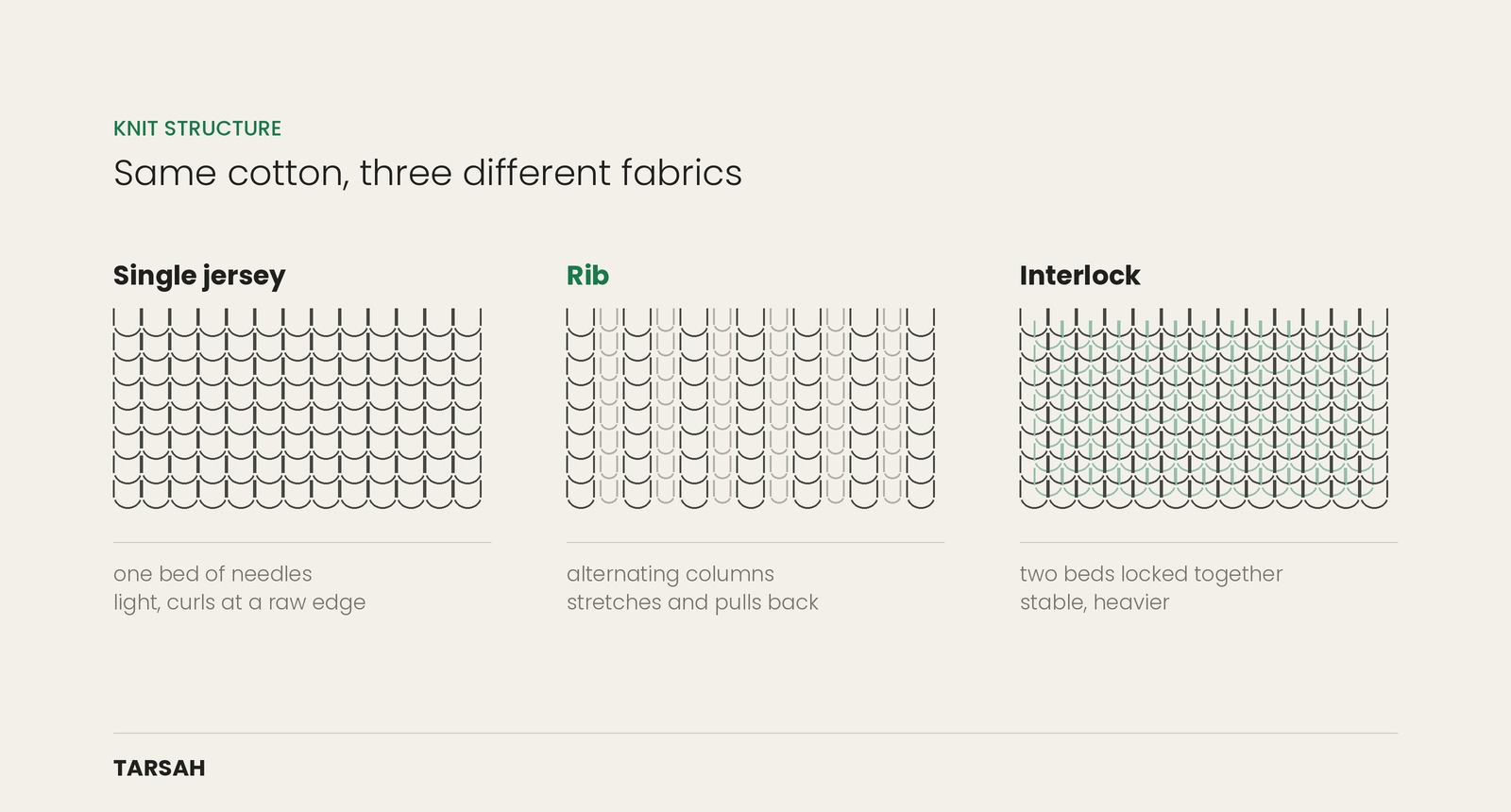
Two shirts can be the same cotton, the same fibre length and the same weight on the label, and still feel like different garments in the hand.
What separates them is structure. Knitting is a way of building fabric out of loops, and the pattern of those loops decides almost everything about how the finished shirt behaves.
How to Layer a T-Shirt Without Looking Bulky
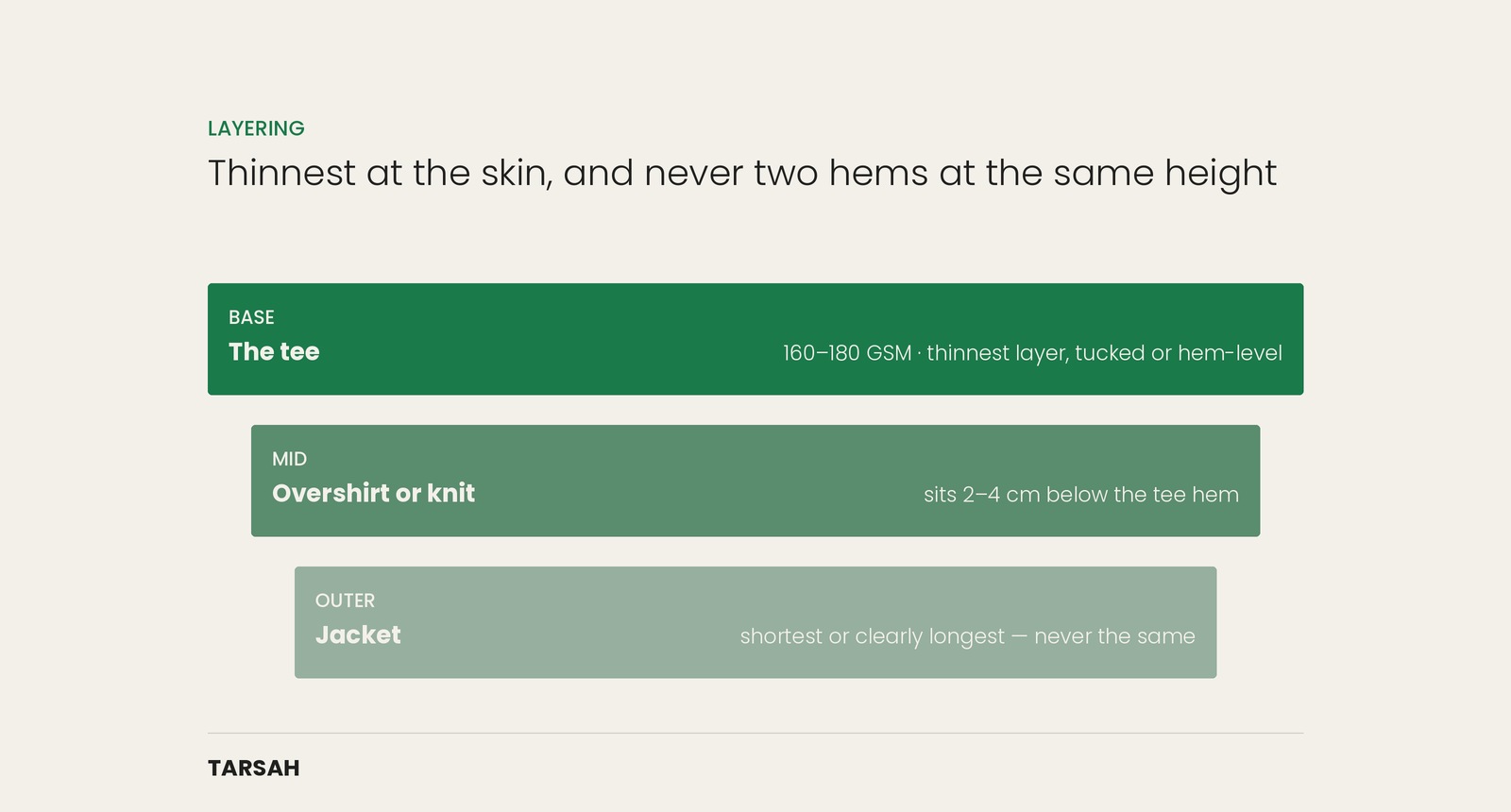
Layering is what gets a summer wardrobe through autumn. Done badly it just makes you look wider, with a shirt bunching under a jacket and two hems fighting over the same three centimetres.
The fixes are mostly mechanical. It is about thickness and length, not about taste.
GSM Explained: What T-Shirt Weight Actually Means
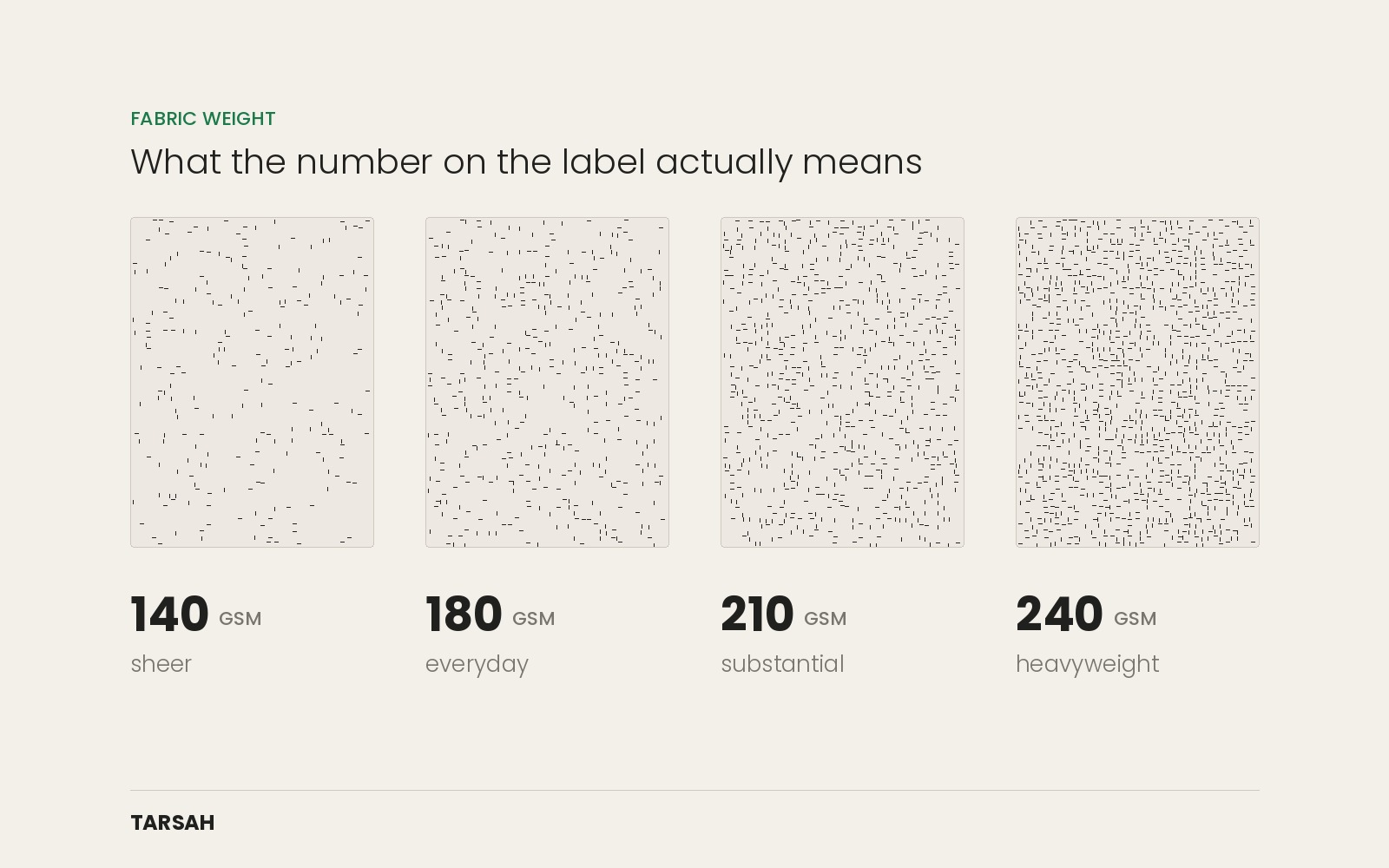
You have probably seen it on a product page and scrolled straight past it. 180 GSM. 220 GSM. Three letters and a number that tell you more about how a T-shirt will age than the price tag does.
GSM stands for grams per square metre — the weight of one square metre of the fabric. That is the whole definition. But that single number quietly decides whether your shirt drapes or clings, whether it survives a summer or a decade, and whether you can see your skin through it in daylight.