

Quality Basics
Ring-Spun vs Open-End: Why Two Cotton Tees Feel Different
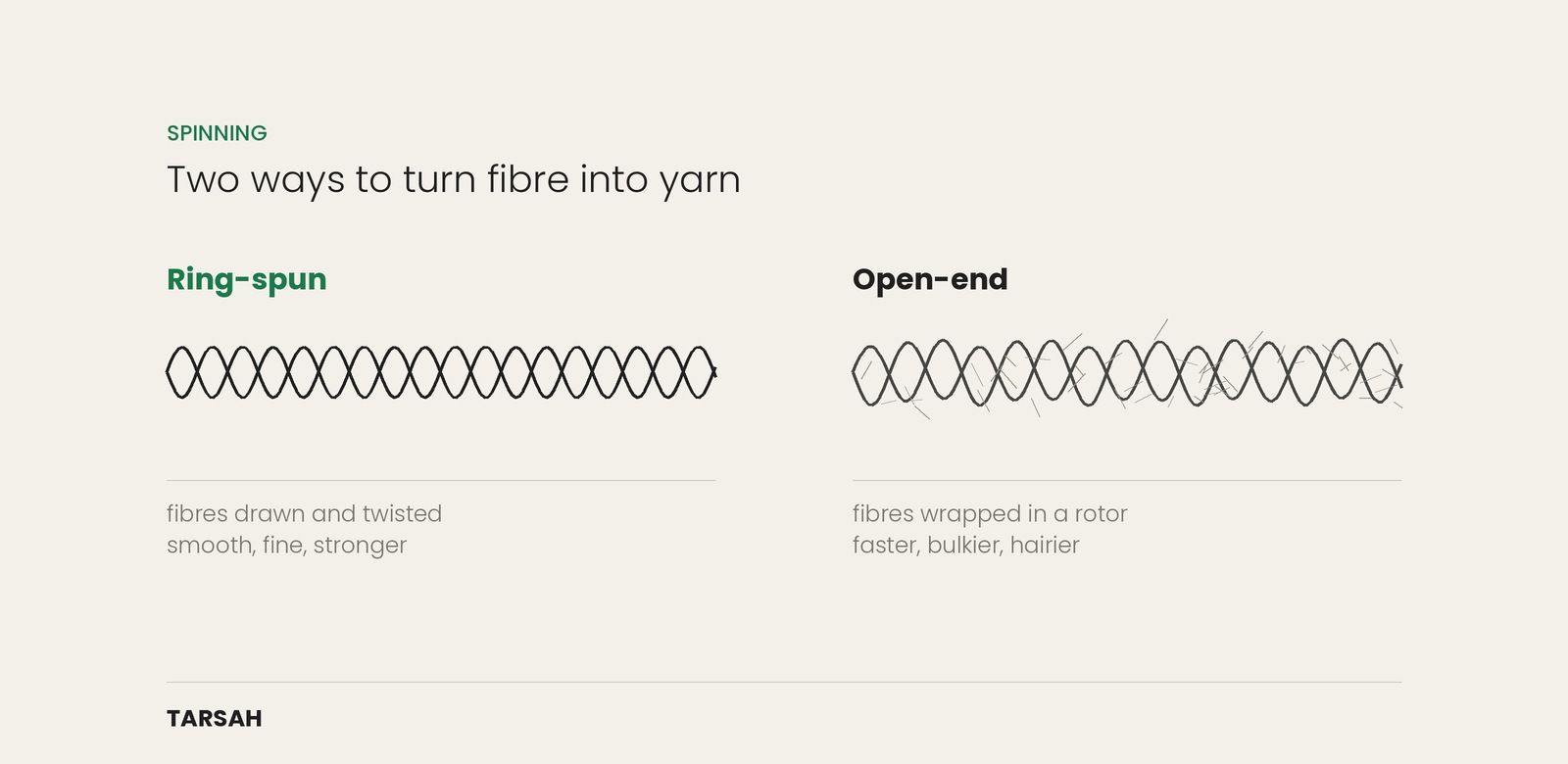
"100% ring-spun cotton" turns up on a lot of hangtags, usually with no explanation attached. It is not marketing garnish. It describes how the cotton was turned into thread, and it is the reason two shirts with identical fibre and identical weight can feel nothing alike.
There are two dominant ways to spin cotton, and the choice is almost always about speed.
Five Questions Worth Asking a Clothing Brand
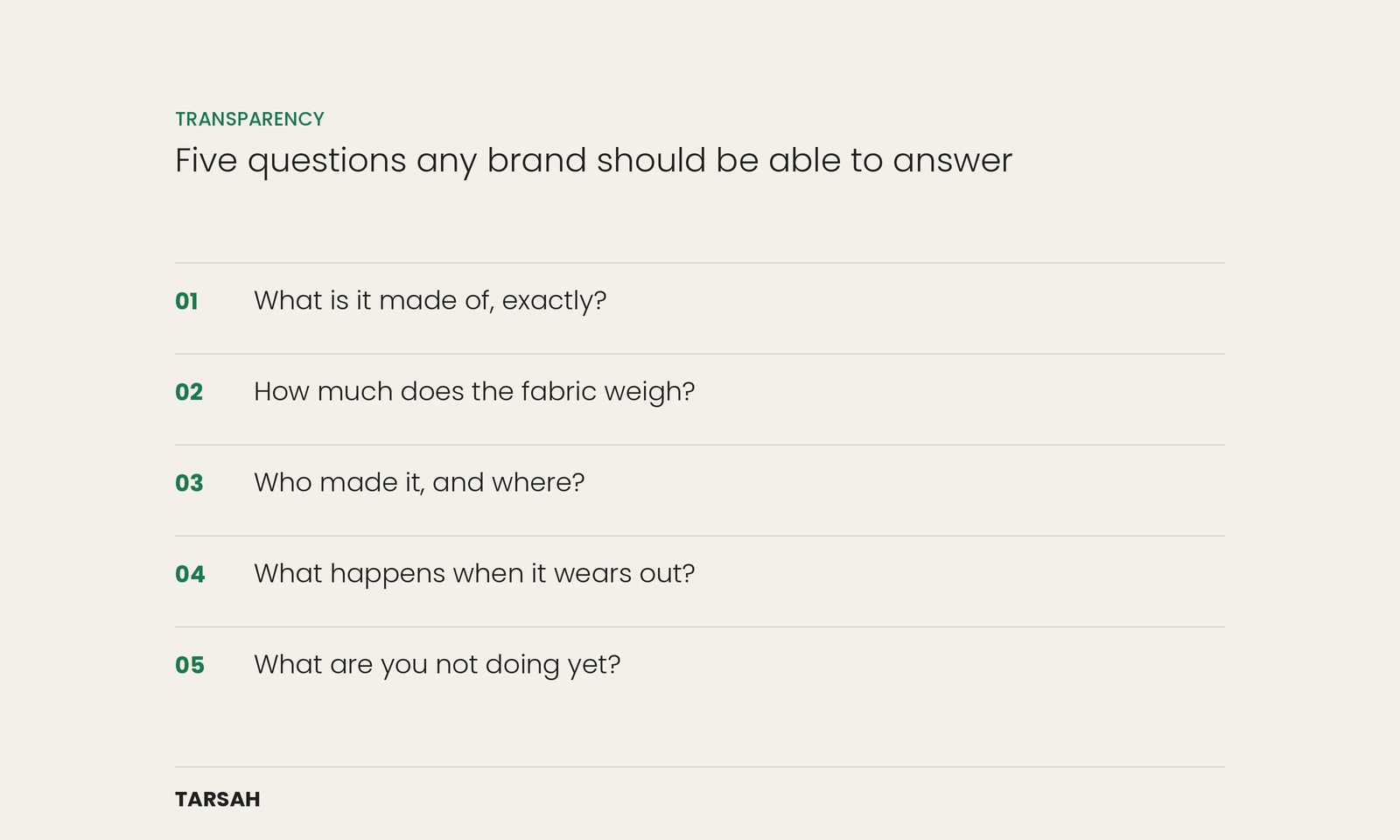
"Sustainable" is not a regulated word. Neither is "conscious", "responsible", "eco" or "mindfully made". Any brand can print any of them on any garment, and most do.
What cannot be faked is a specific answer to a specific question. Here are five worth asking — including of us.
Single Jersey, Rib and Interlock: The Knit Under Your T-Shirt
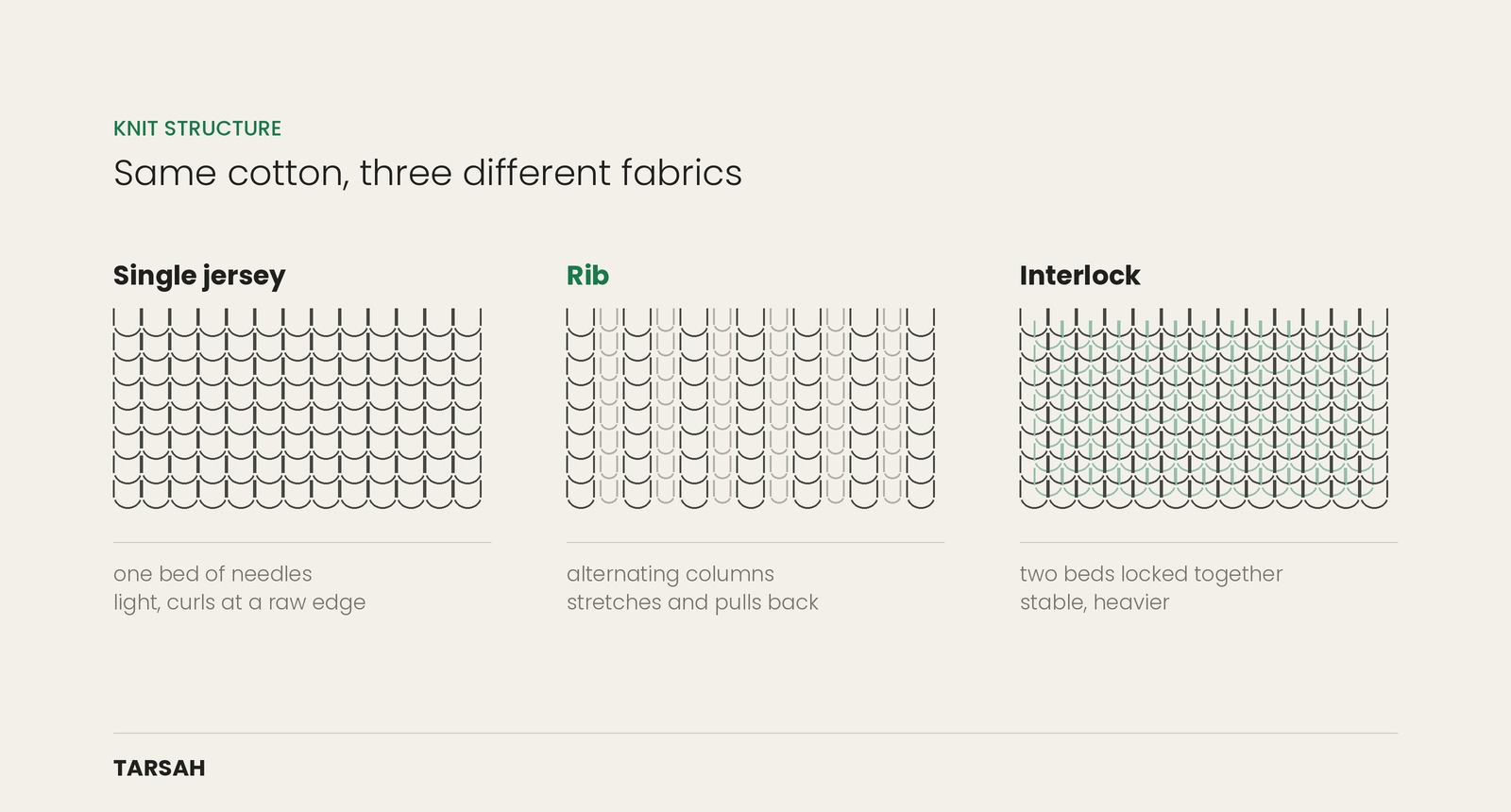
Two shirts can be the same cotton, the same fibre length and the same weight on the label, and still feel like different garments in the hand.
What separates them is structure. Knitting is a way of building fabric out of loops, and the pattern of those loops decides almost everything about how the finished shirt behaves.
Why Collars Stretch Out, and How to Stop It
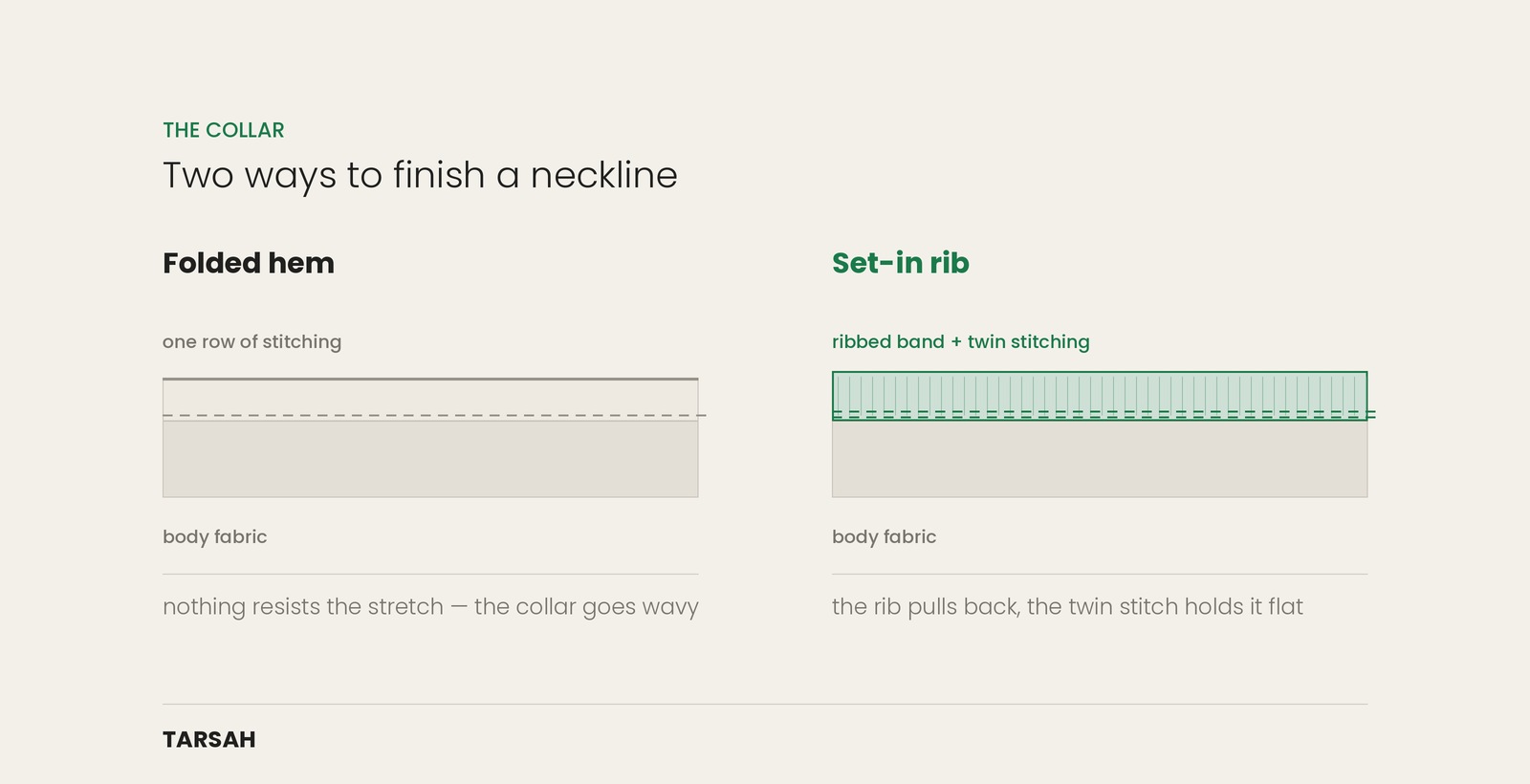
The body of the shirt is fine. The colour is fine. But the collar has gone soft and wavy, sits away from your neck, and the whole thing now reads as an old T-shirt.
Collars are the first thing to fail on most tees, and the reason is almost always construction rather than abuse.
Why Cotton Shrinks, and How to Stop It
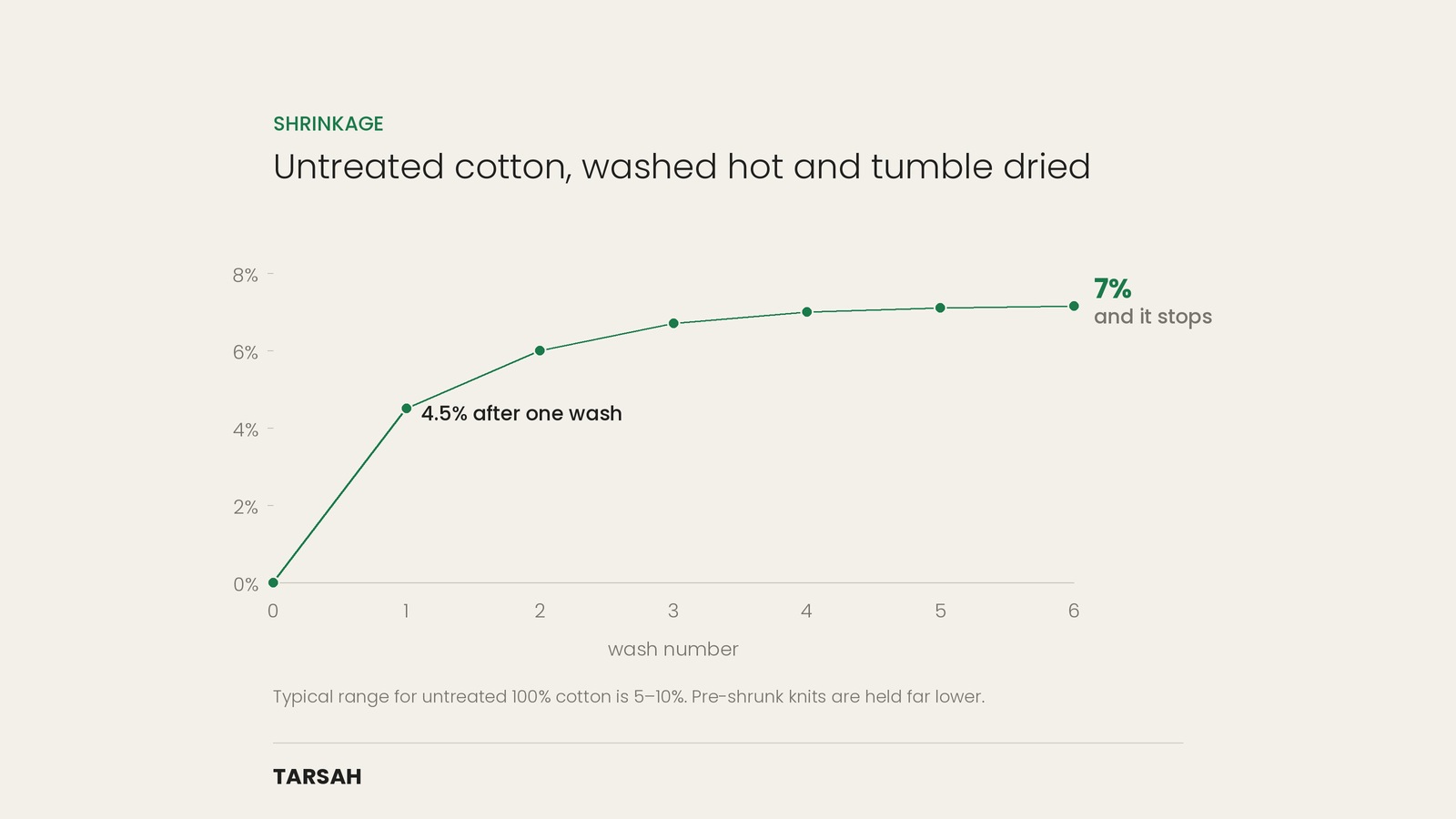
You bought the right size. It came out of the first wash a size smaller, shorter in the body, and now it rides up when you lift your arms.
Cotton shrinking is not a defect and it is not really the fibre's fault. It is tension being released — and once you know where that tension came from, most of it is avoidable.
Combed vs Carded Cotton: Why Some Shirts Pill and Others Don't
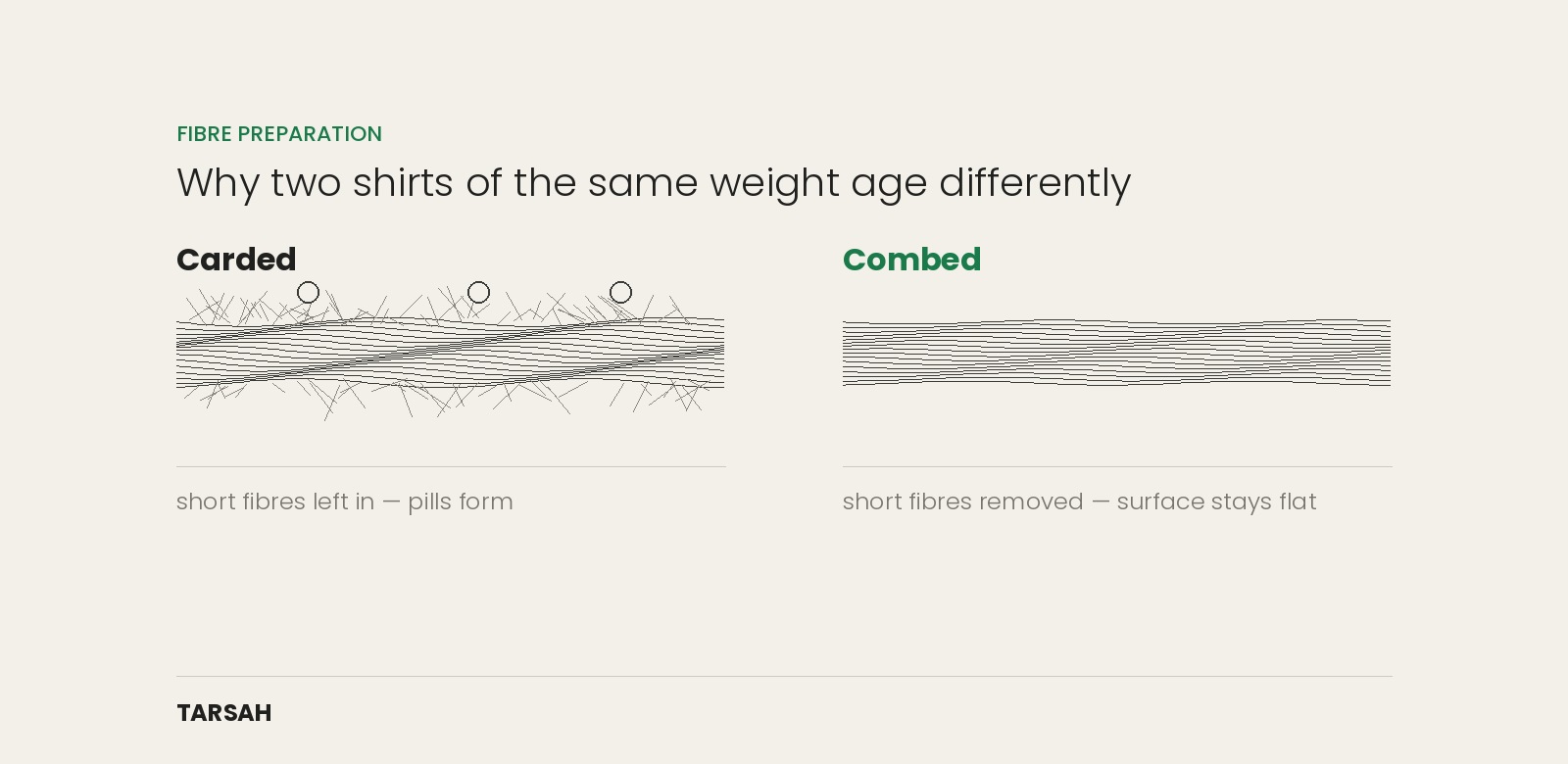
Two shirts. Same weight, same price, same colour. One still looks composed a year in. The other grew a fuzzy halo across the chest by month two.
The difference usually is not the cotton itself. It is what happened to the fibres before anyone spun them into yarn.
Cost Per Wear: The Only Clothing Maths That Matters
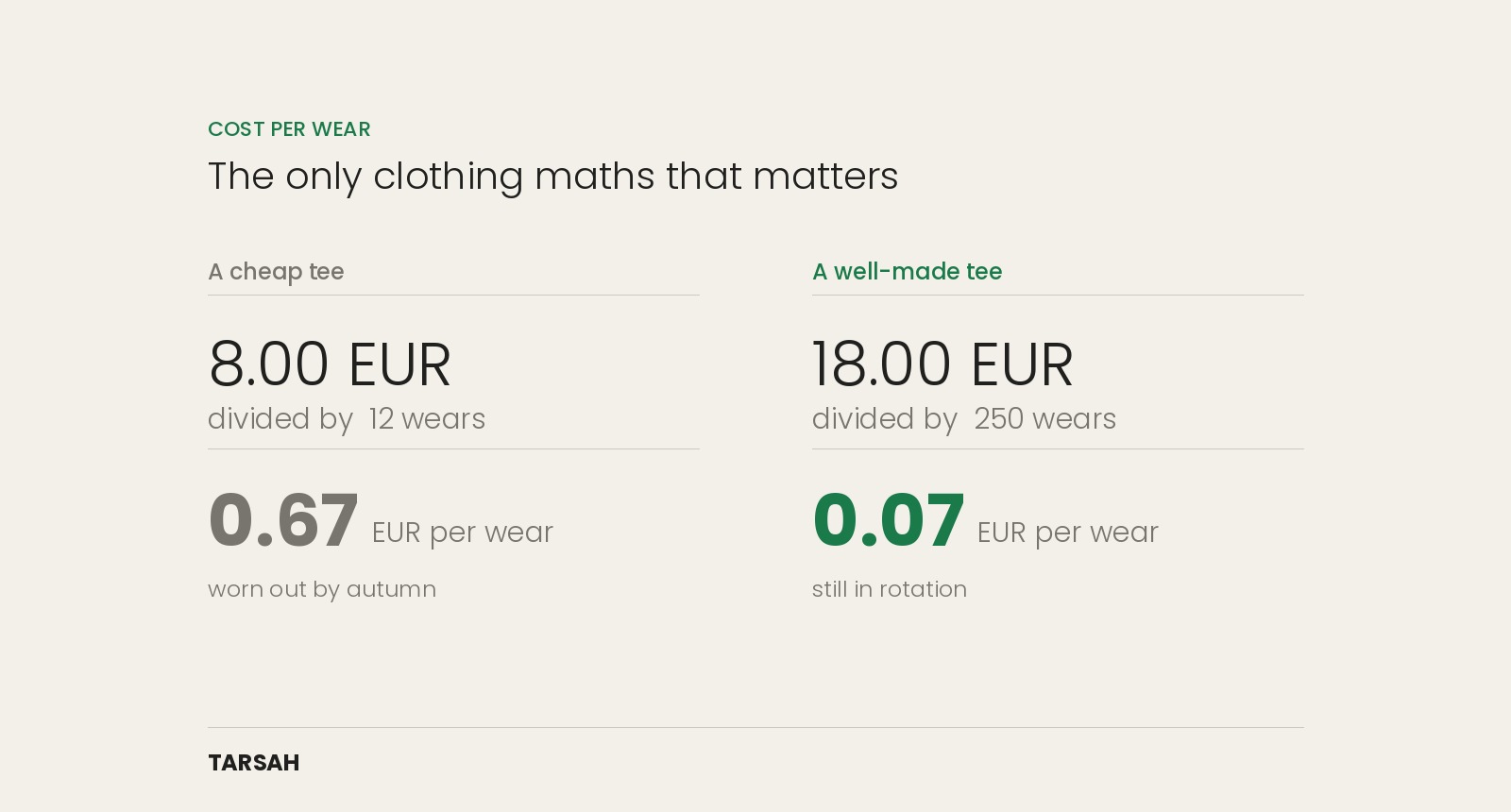
An 8-euro T-shirt feels like a bargain right up until you count how many times you actually wore it.
There is one number that tells you more about a garment than its price tag, and almost nobody runs it. Divide what you paid by the number of times you wore it. That is cost per wear, and it quietly reorders your entire wardrobe.
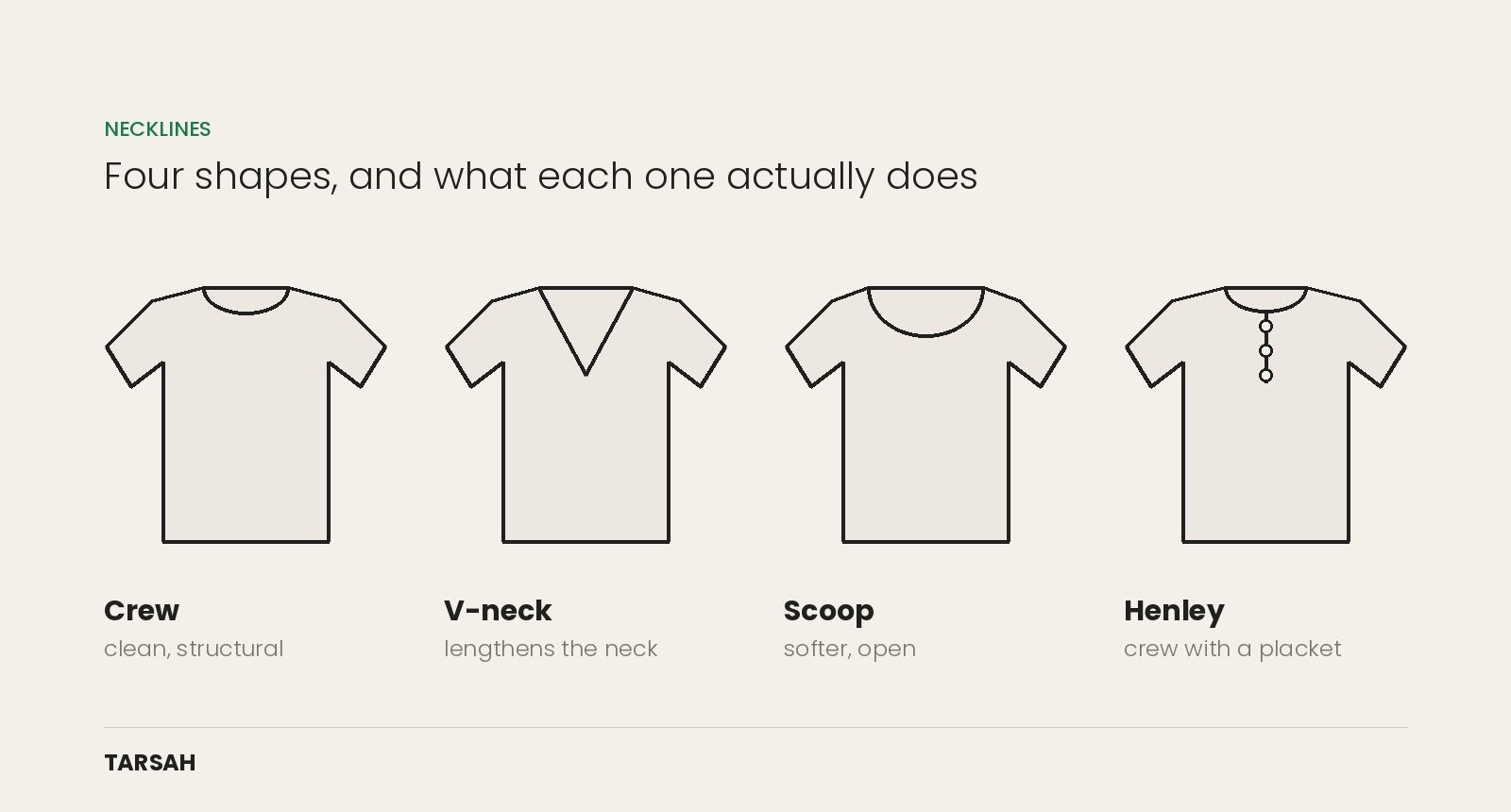
Neckline Guide: Crew, V-Neck, Scoop and Henley
Most people pick a T-shirt by fit and colour, then wonder why it never looks quite right — open under a jacket, or worn on its own. The neckline is usually the reason.
It is the part of the shirt closest to your face, which means it does more work than any other seam. It frames your jaw, sets how formal the shirt reads, and decides whether the whole thing looks deliberate or accidental.
GSM Explained: What T-Shirt Weight Actually Means
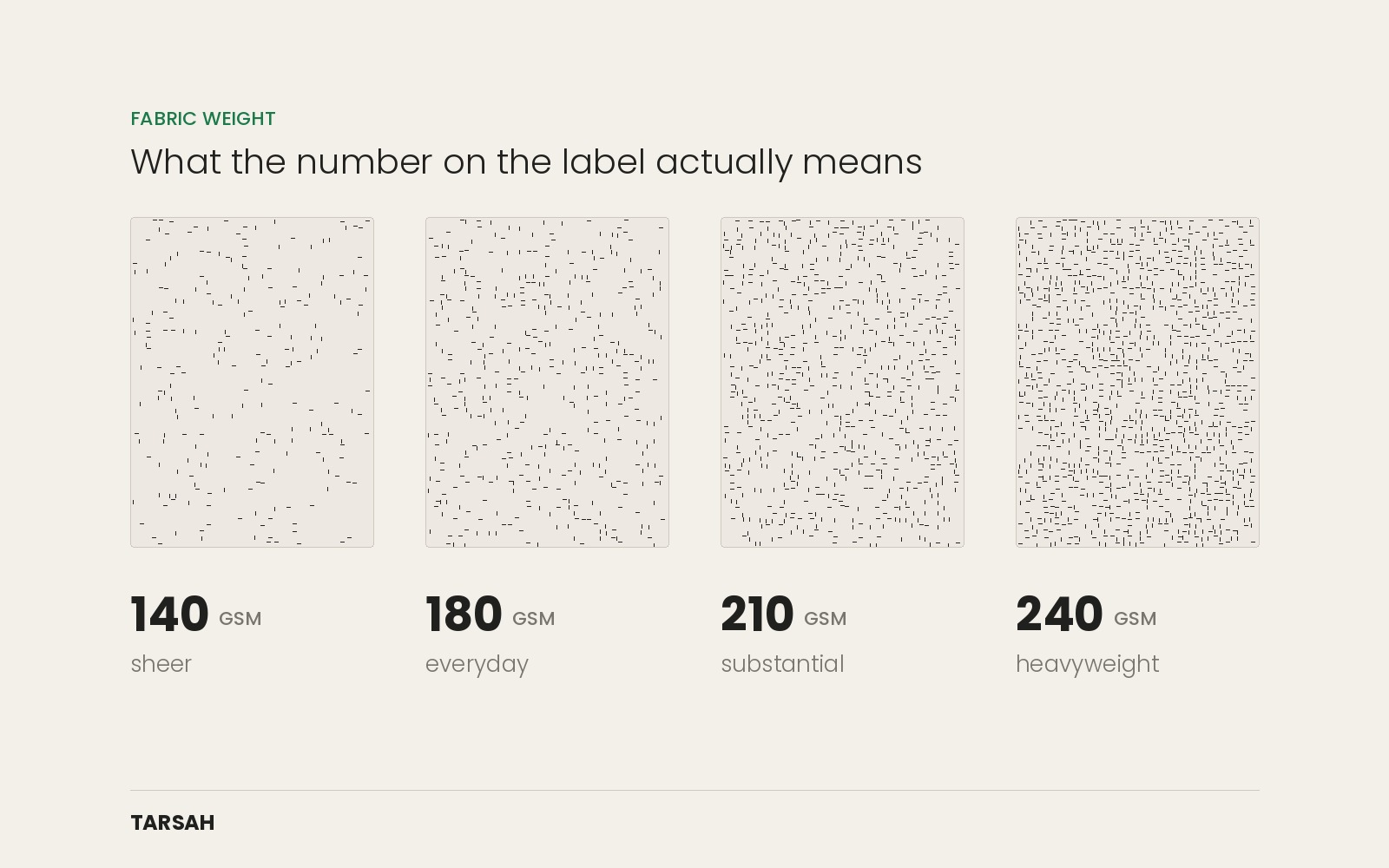
You have probably seen it on a product page and scrolled straight past it. 180 GSM. 220 GSM. Three letters and a number that tell you more about how a T-shirt will age than the price tag does.
GSM stands for grams per square metre — the weight of one square metre of the fabric. That is the whole definition. But that single number quietly decides whether your shirt drapes or clings, whether it survives a summer or a decade, and whether you can see your skin through it in daylight.