

Where the number comes from
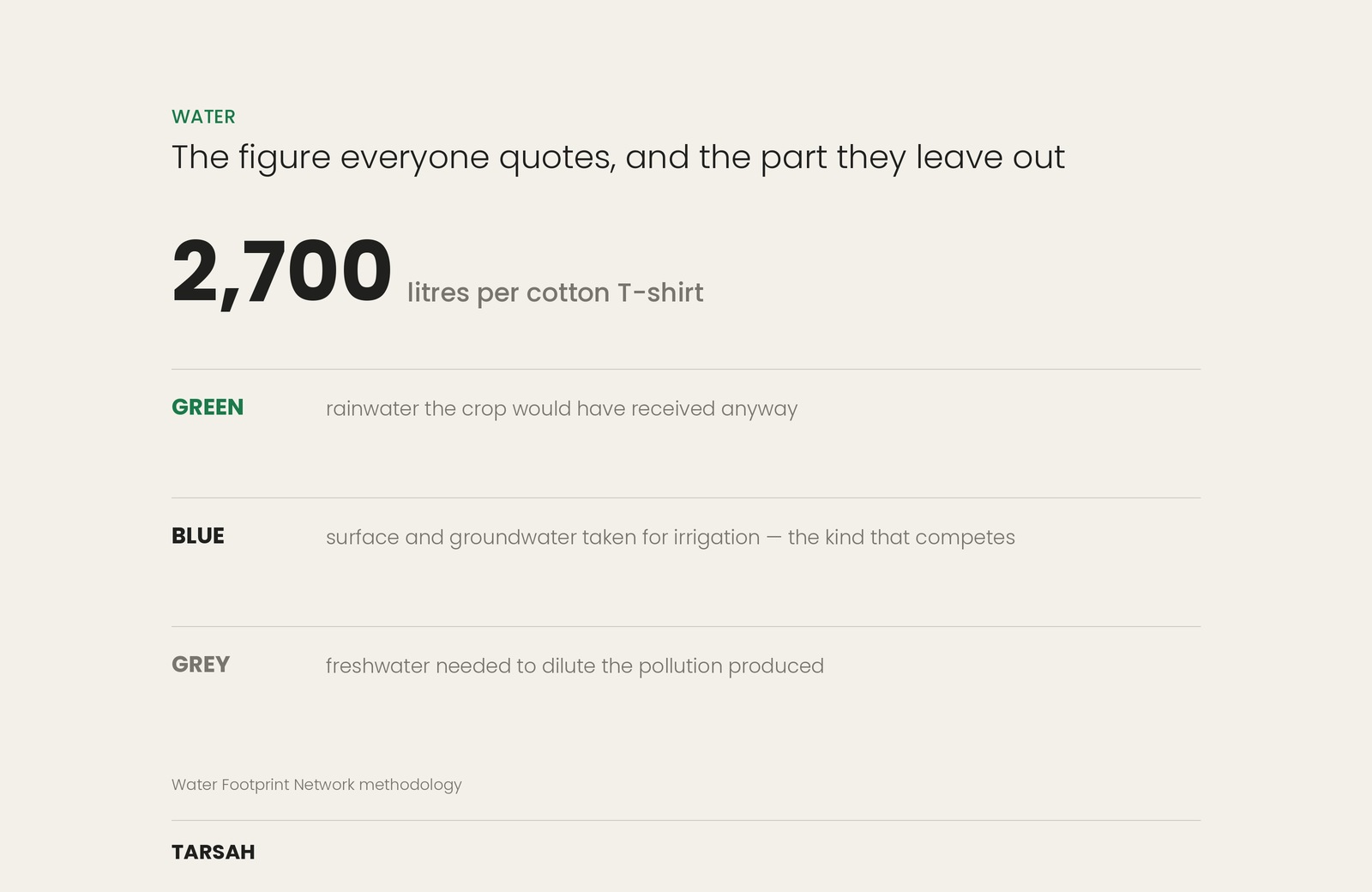
It traces back to the Water Footprint Network, which totals every litre involved in growing, processing and finishing the cotton in one shirt. Roughly 2,700 litres, most of it consumed in the field rather than the factory.
That total is sound. What gets lost is that a water footprint is not one quantity — it is three, and they mean very different things.
Three kinds of water, counted together
- Green water is rainfall the crop takes up as it grows. It fell on that land whether or not anyone planted cotton there.
- Blue water is surface or groundwater diverted for irrigation. It is abstracted from rivers, lakes and aquifers, and it is genuinely unavailable to anything else once used.
- Grey water is the freshwater it would take to dilute the pollution from fertiliser and processing back to acceptable quality. It is a modelled figure, not a physical flow.
Add the three together and you get a headline number. Report only the headline and you have flattened the one distinction that matters.
Why the distinction decides whether it matters
Blue water is the part that competes — with drinking supply, with other crops, with the river itself. Green water largely does not.
Across all crop production globally, the split is about 78 per cent green, 12 per cent blue and 10 per cent grey. So most agricultural water is rain. But cotton is irrigated far more heavily than the average crop, which means its blue share runs well above that figure.
A rainfed cotton crop and an irrigated one can report a similar total and have completely different consequences downstream.
What that means for cotton grown in Egypt
We should be straight about this, because it cuts against us.
The Nile Delta gets almost no meaningful rainfall. Egyptian agriculture is irrigated agriculture, which means cotton grown there is drawing predominantly blue water — the kind that counts, from a river system already under pressure from every direction.
We are not going to claim our cotton is thirsty in a gentler way than anyone else's. It is irrigated. That is the honest position, and it is a real cost of making the thing we make.
The lever that actually moves
Here is what changes the arithmetic. Every litre in that 2,700 is spent before the shirt reaches you. It is fixed at the moment of purchase and nothing you do afterwards adds to it or removes it.
What is not fixed is how many wears you divide it by. A shirt worn 250 times costs about 11 litres a wear. The same shirt worn twelve times before it loses its shape costs 225.
It is the same logic as cost per wear, measured in water instead of money — and it is the only part of the equation a buyer controls.
Buy fewer, keep them longer
That is an unglamorous conclusion for a company that sells T-shirts, and it is still the right one. The most water-efficient garment in your wardrobe is the one you are still wearing in five years.