

The maths, in one line
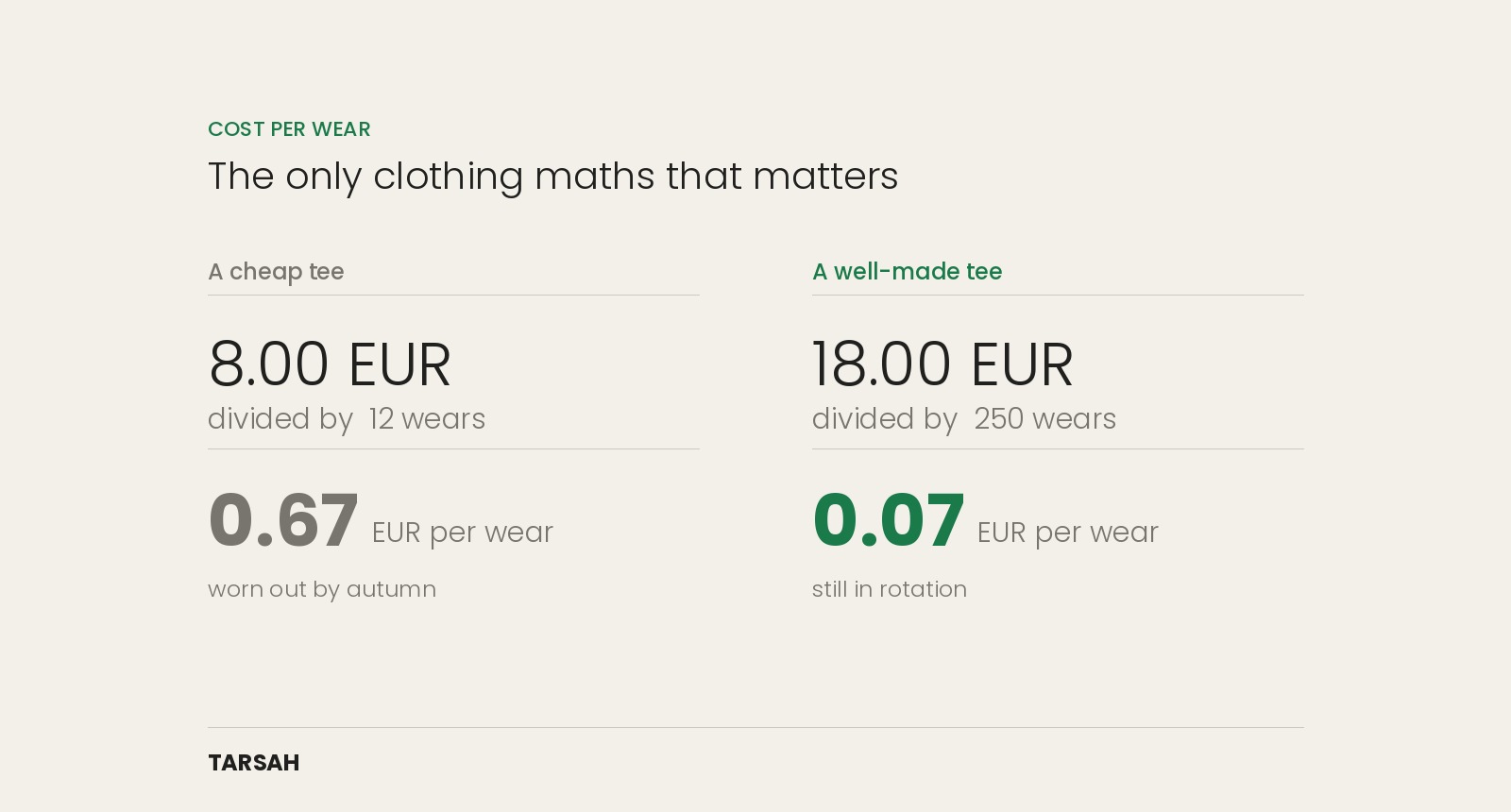
Price divided by wears. That is the whole formula.
- The 8-euro tee. Collar goes wavy by week six, you stop reaching for it, it becomes a paint shirt. Twelve real wears. 0.67 per wear.
- The 18-euro tee. Still holding its shape three years in, worn a couple of times a month. Around 250 wears and counting. 0.07 per wear.
The more expensive shirt is roughly nine times cheaper. It just asked for the money up front.
Why cheap clothing rarely stays cheap
The catch is that cost per wear is not fixed at the till. It is decided by construction — and you cannot see construction in a product photo.
Garments fail in a predictable order: the collar loses its recovery, the shoulder seam twists, the fabric goes sheer where it rubs. Every one of those is a manufacturing decision made months before you saw the price.
Buy the failure and you have bought a very short denominator.
The number nobody puts on the label
Fast fashion depends on you never doing this arithmetic. The model needs the garment to disappoint you quietly, on schedule, so you come back in ninety days rather than ninety months.
None of that requires a conspiracy. It is simply what happens when the only number on display is the one at checkout.
How to use it before you buy, not after
You cannot count wears in advance, but you can estimate honestly.
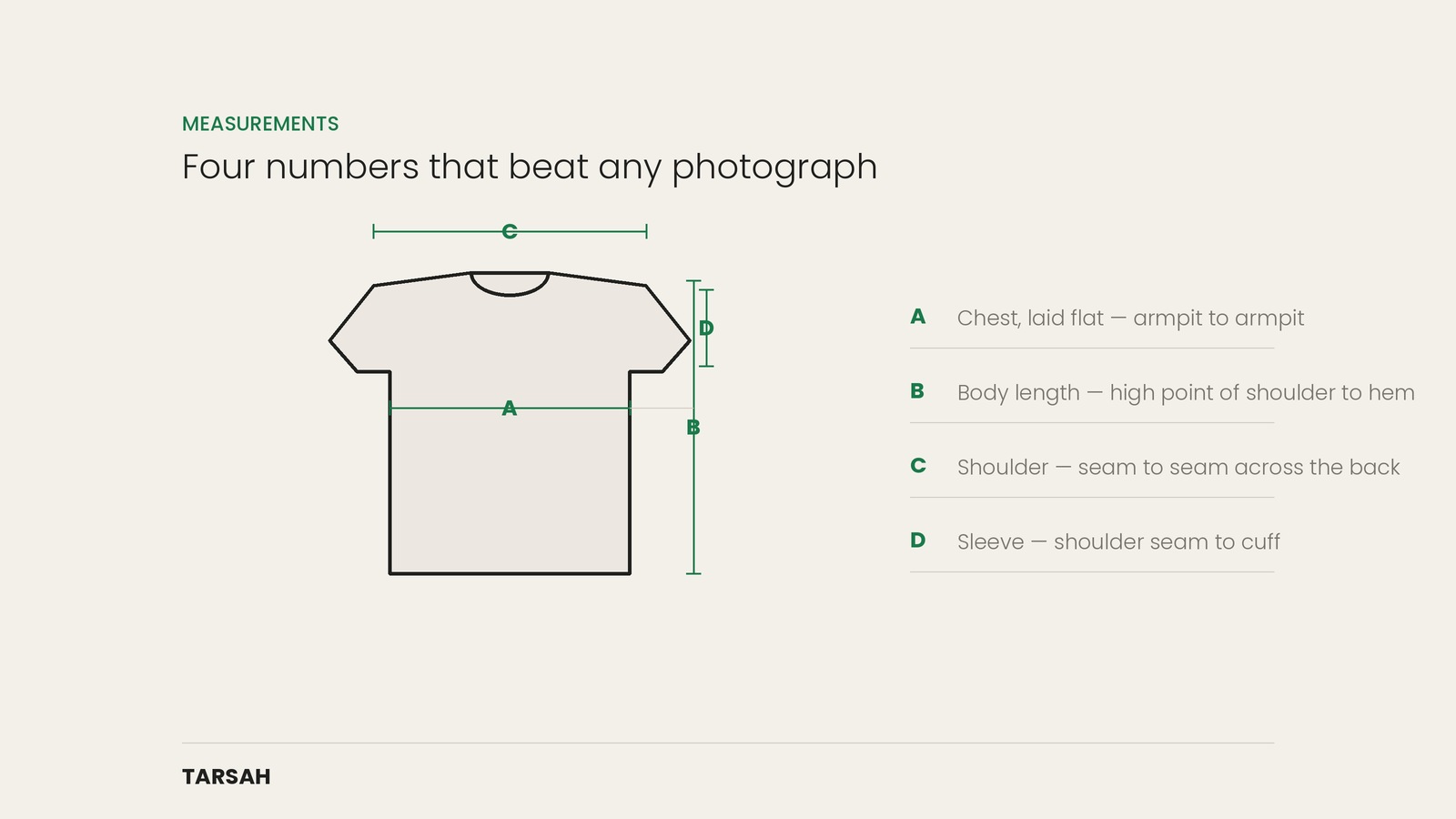
Ask how many times a month you would genuinely reach for this. Then ask what has to survive for that to happen — the collar, the seams, the colour. If you cannot answer the second question by handling the garment, the price is not your problem. The missing information is.
Where Tarsah lands
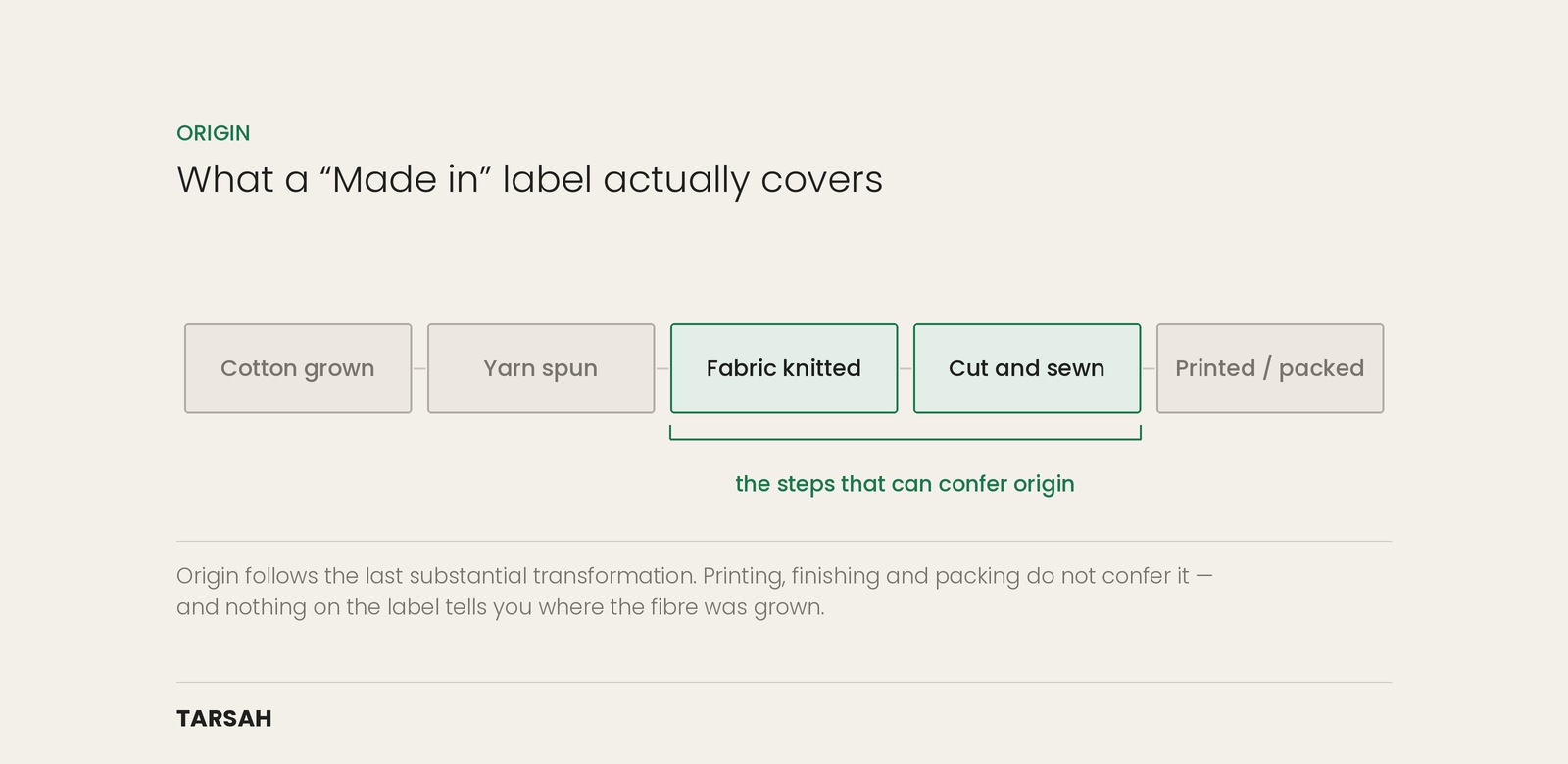
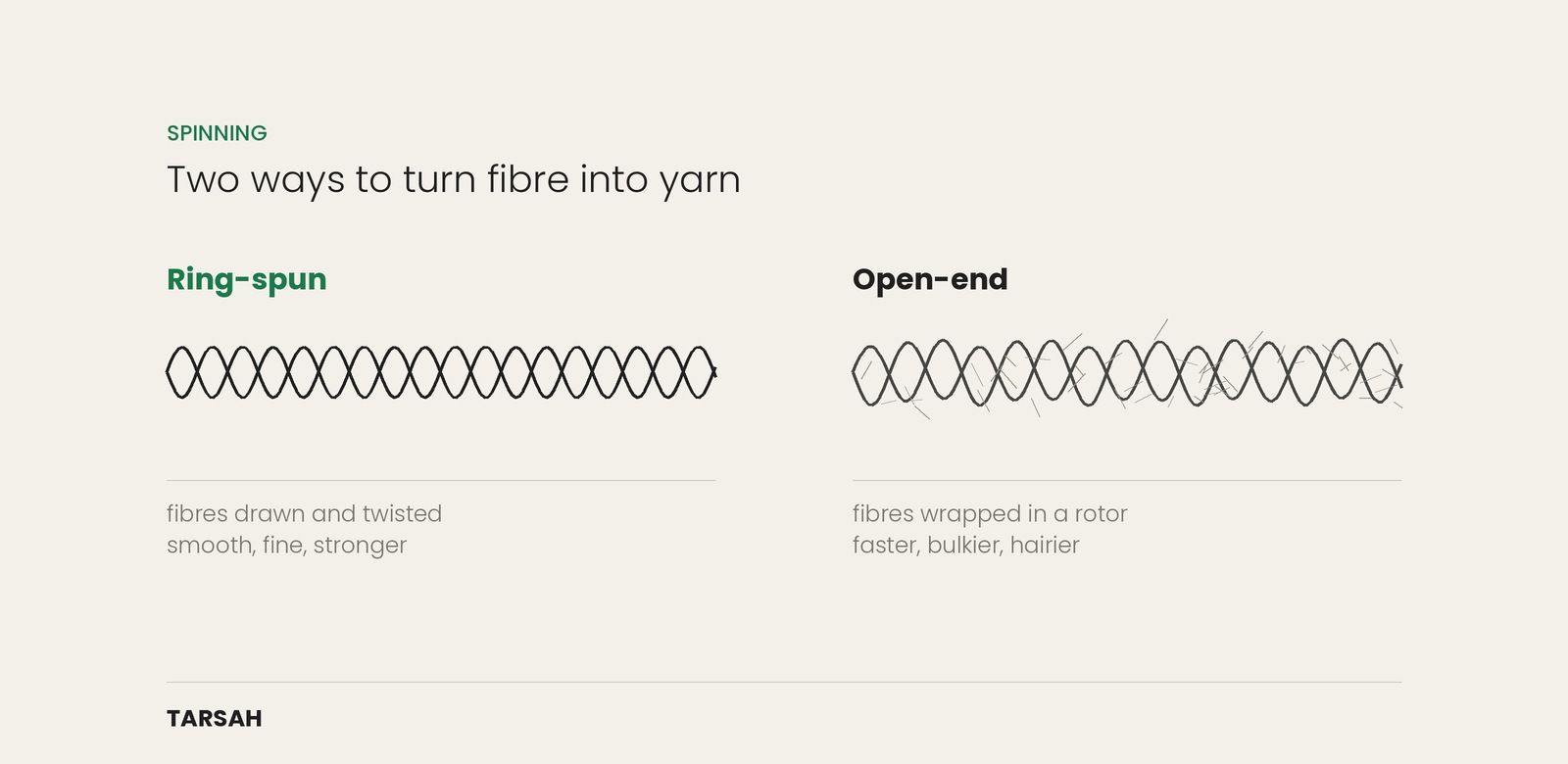
Everything we make is built to move the denominator rather than the numerator. Long-staple cotton, made in Egypt, no synthetic blend, and garments meant to survive the wash cycle rather than the return window.
We are not the cheapest shirt you can buy today. We would rather be the cheapest one you own in three years.
Run the numbers yourself
Every product page tells you what the shirt is made of, so you can estimate your own cost per wear before you spend anything.