

What combing actually removes
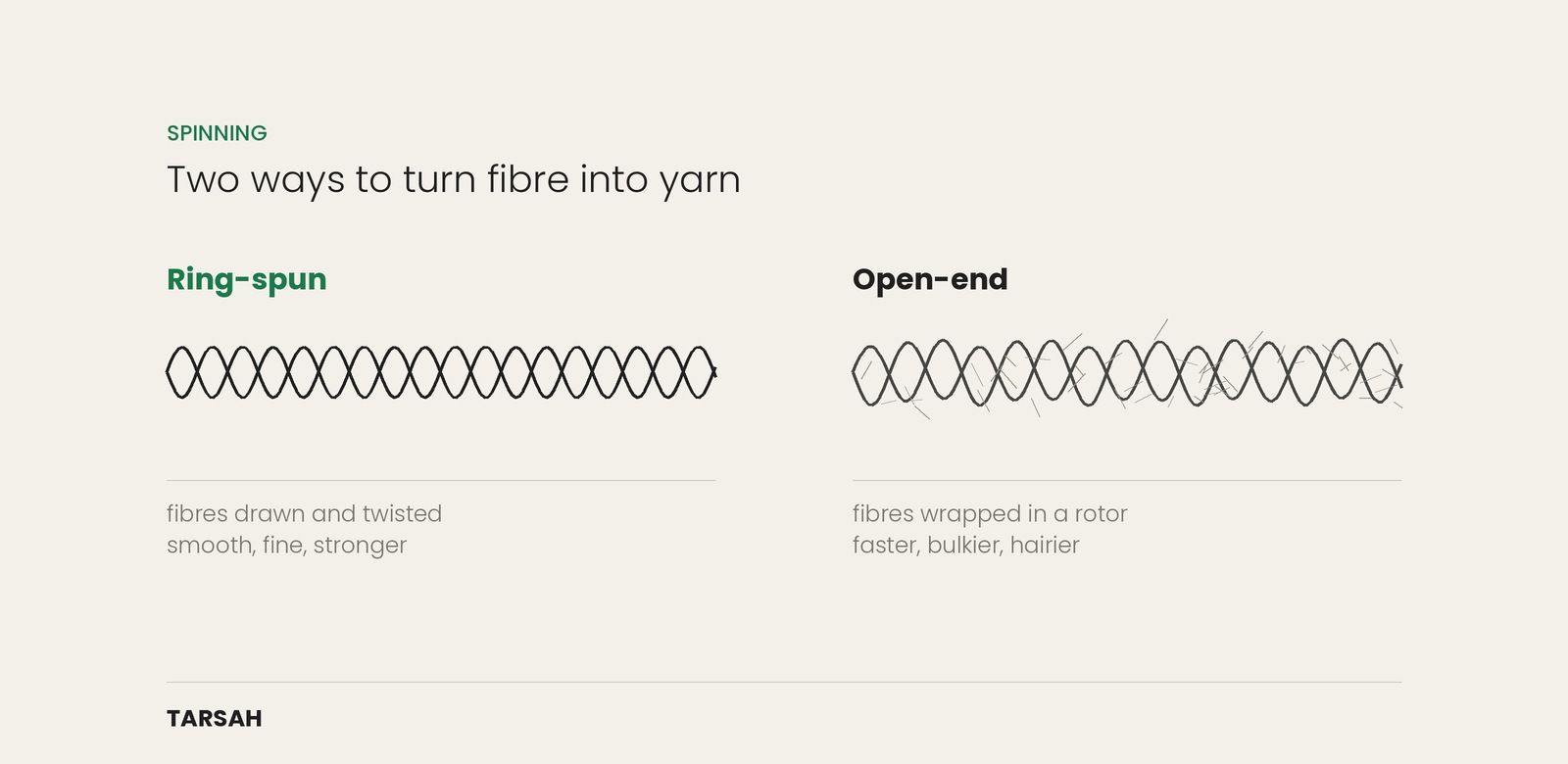
Raw cotton arrives as a tangle of fibres of wildly different lengths. Carding untangles that mess and lays it roughly parallel — enough to spin into yarn. For most T-shirts, that is where the process stops.
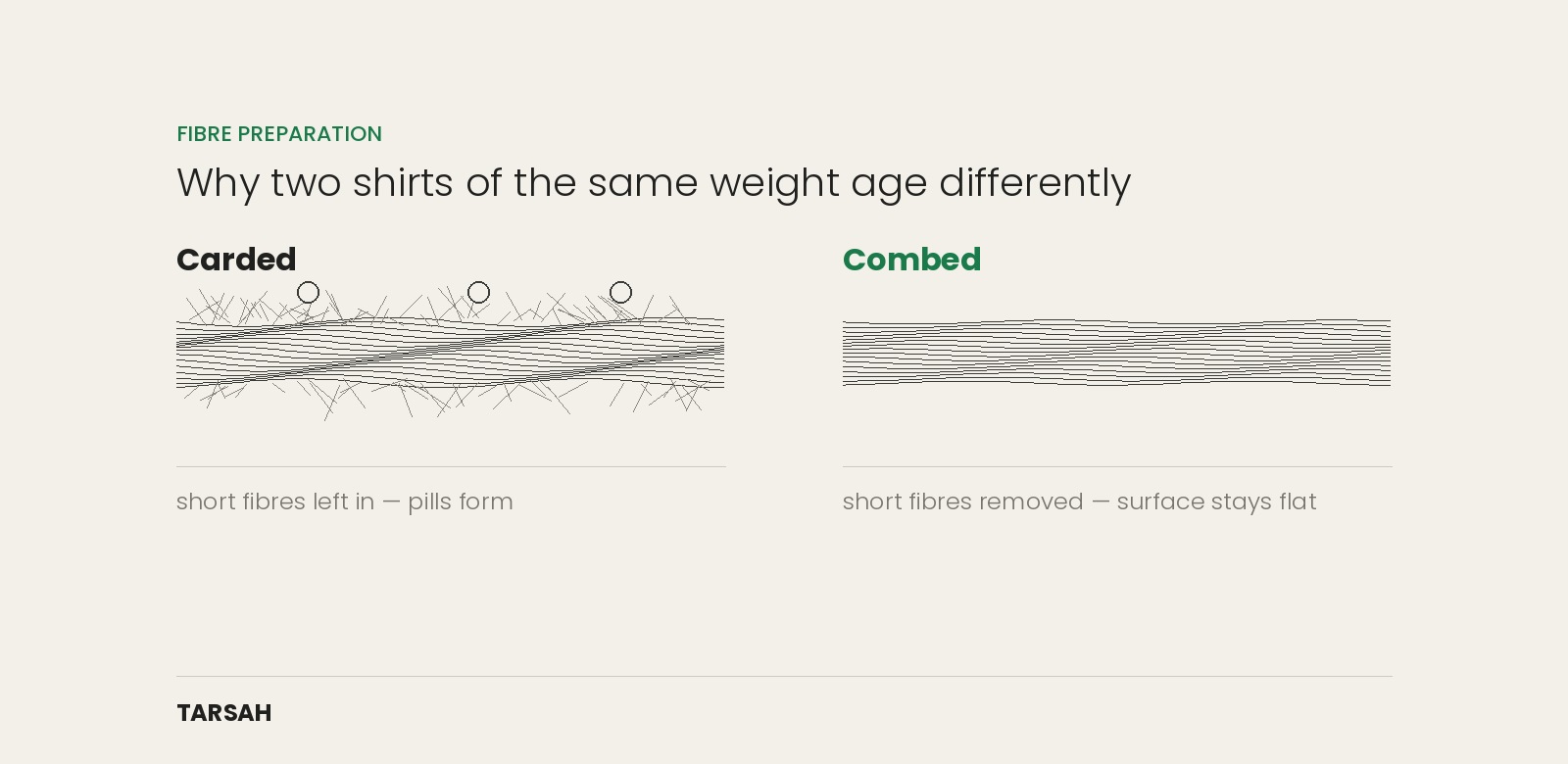
Combing adds a step. Fine metal teeth pull through the carded cotton and strip out the short fibres, the neps and the last of the plant debris. What survives is only the long stuff, all lying in the same direction.
Why pilling starts at the fibre
A pill is just a short fibre that worked its way loose, tangled with its neighbours and balled up on the surface.
- Carded yarn is full of short fibres, each with two free ends, and every one of them is a candidate. Friction does the rest — a seatbelt, a backpack strap, a wash cycle.
- Combed yarn has far fewer loose ends to give up, so the surface stays flat for longer and the shirt keeps looking deliberate.
This is why weight alone does not predict durability. A heavy carded tee can pill faster than a lighter combed one — worth remembering next time you read a GSM number.
How to tell without a label
Hold the fabric up to the light and look at the surface rather than through it. Combed cotton reads smooth and even. Carded cotton shows a faint fuzz — tiny fibres standing up off the face of the cloth, visible before you have worn it once.
Then run your palm flat across it. Combed feels cool and slick. Carded catches, very slightly, on dry skin.
It costs more because it wastes more
Combing strips out roughly a fifth of the raw cotton by weight. That waste is the entire reason it costs more, and the entire reason most brands quietly skip it.
It is also the least visible upgrade in a garment — impossible to photograph, obvious after twenty washes. Which makes it a fair test of what a brand is actually optimising for.
Where Tarsah lands
We work in long-staple cotton, made in Egypt, which starts with longer fibres than most cotton does, and we do not blend in synthetics to paper over a shortfall.
Longer fibres mean fewer loose ends before anything else happens. The point is a surface that still looks new when the shirt is old.
Check the surface, not the price
Every product page states what the cotton is, so you are not guessing at the part you cannot see.