

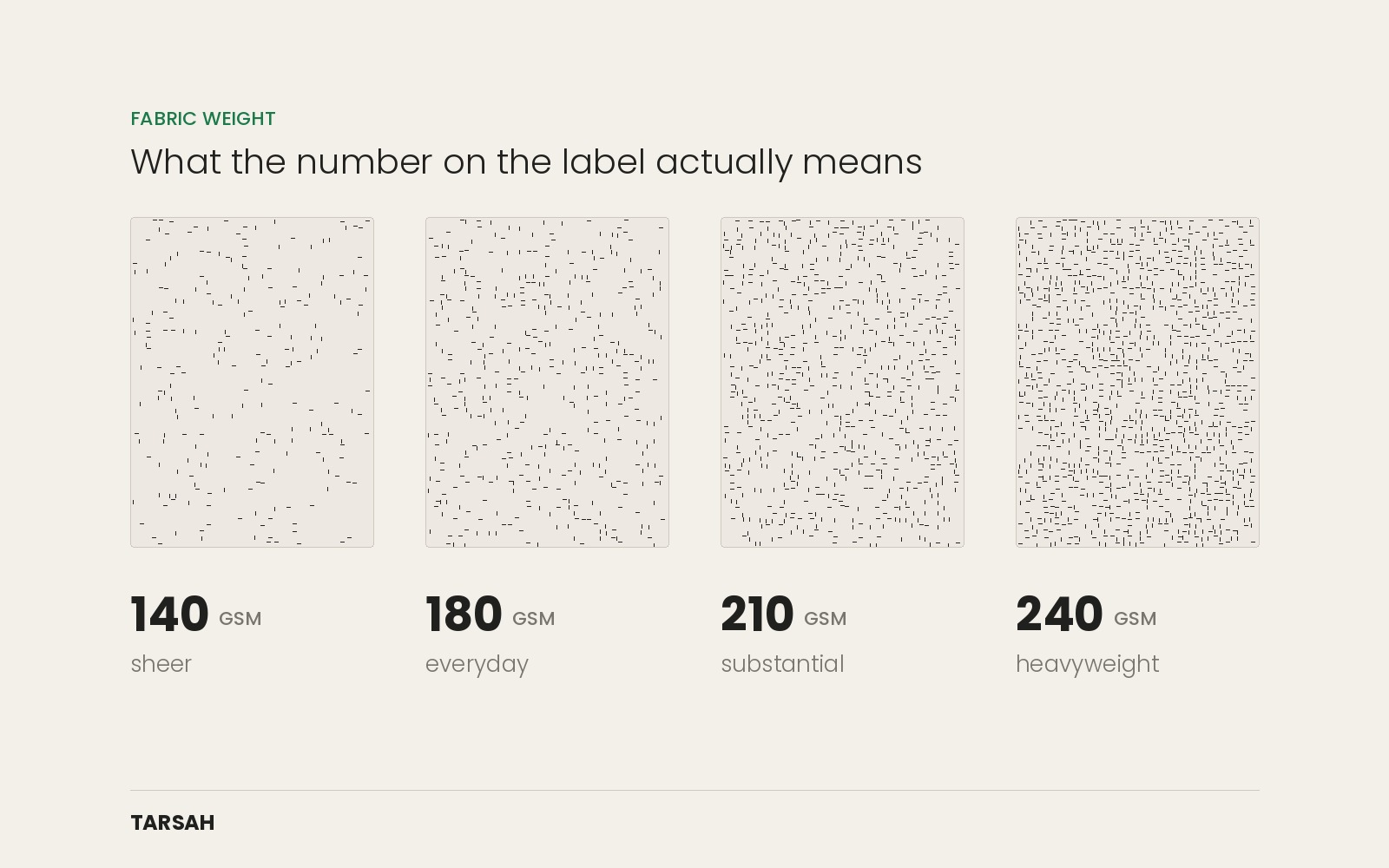
What the numbers actually feel like
- 120–150 GSM — Very light. Cool in heat, but thin enough to show what is underneath, and the first to go transparent at the shoulders.
- 160–180 GSM — The everyday sweet spot. Light enough for summer, dense enough to hold its shape.
- 190–220 GSM — Substantial. Falls with weight rather than clinging, hides sweat better, holds a print without warping.
- 230 GSM and up — Heavyweight. Structured, almost jacket-like on the body. Excellent in autumn, punishing in August.
Heavier is not automatically better
This is where most buying advice goes wrong. A 240 GSM shirt made from short, coarse fibres will pill within a month. A 180 GSM shirt made from long-staple, combed cotton will still look composed after three years.
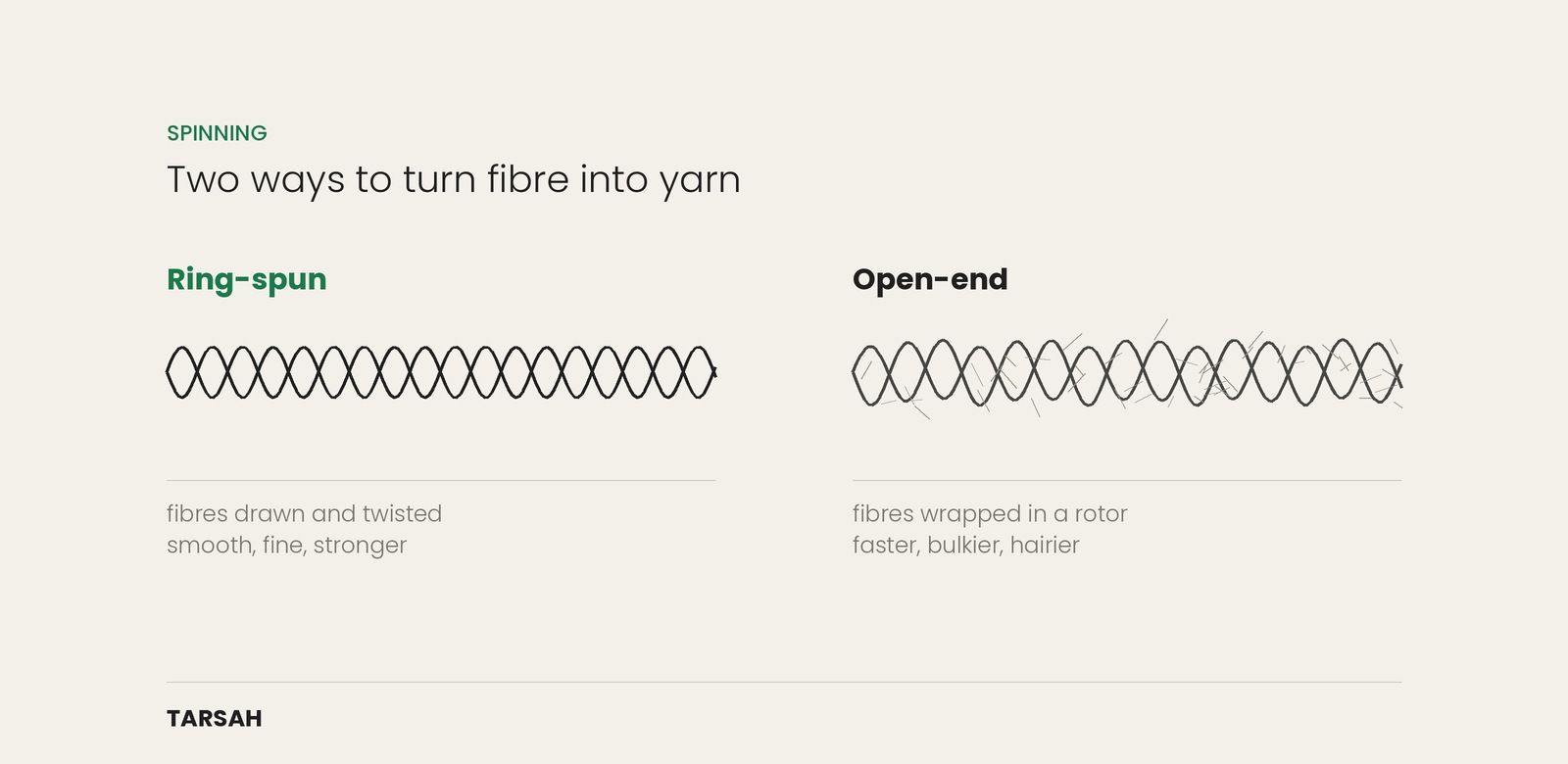
Weight tells you how much cotton is there. It says nothing about which cotton. Fibre length, yarn count and knit consistency decide softness and durability — GSM only decides body and opacity.
The useful way to read it: GSM tells you how a shirt will feel. Fibre quality tells you how long it will feel that way. You need both numbers to be honest, and most brands publish neither.
Why brands quietly drop GSM
Fabric is sold by weight. Shaving 20 GSM off a garment costs a brand nothing in marketing and saves real money on every unit. The shirt looks identical in a photograph. You only find out in the fitting room, or six washes later when the shoulders go sheer.
If a brand does not publish its fabric weight, that is information too.
How to check without a lab
Hold the shirt up to a window. If you can read your hand through it clearly, you are under 150 GSM.
Then bunch the hem in your fist and let go — good mid-weight cotton falls back down and settles. Thin fabric stays creased and clings to itself.
Where Tarsah lands
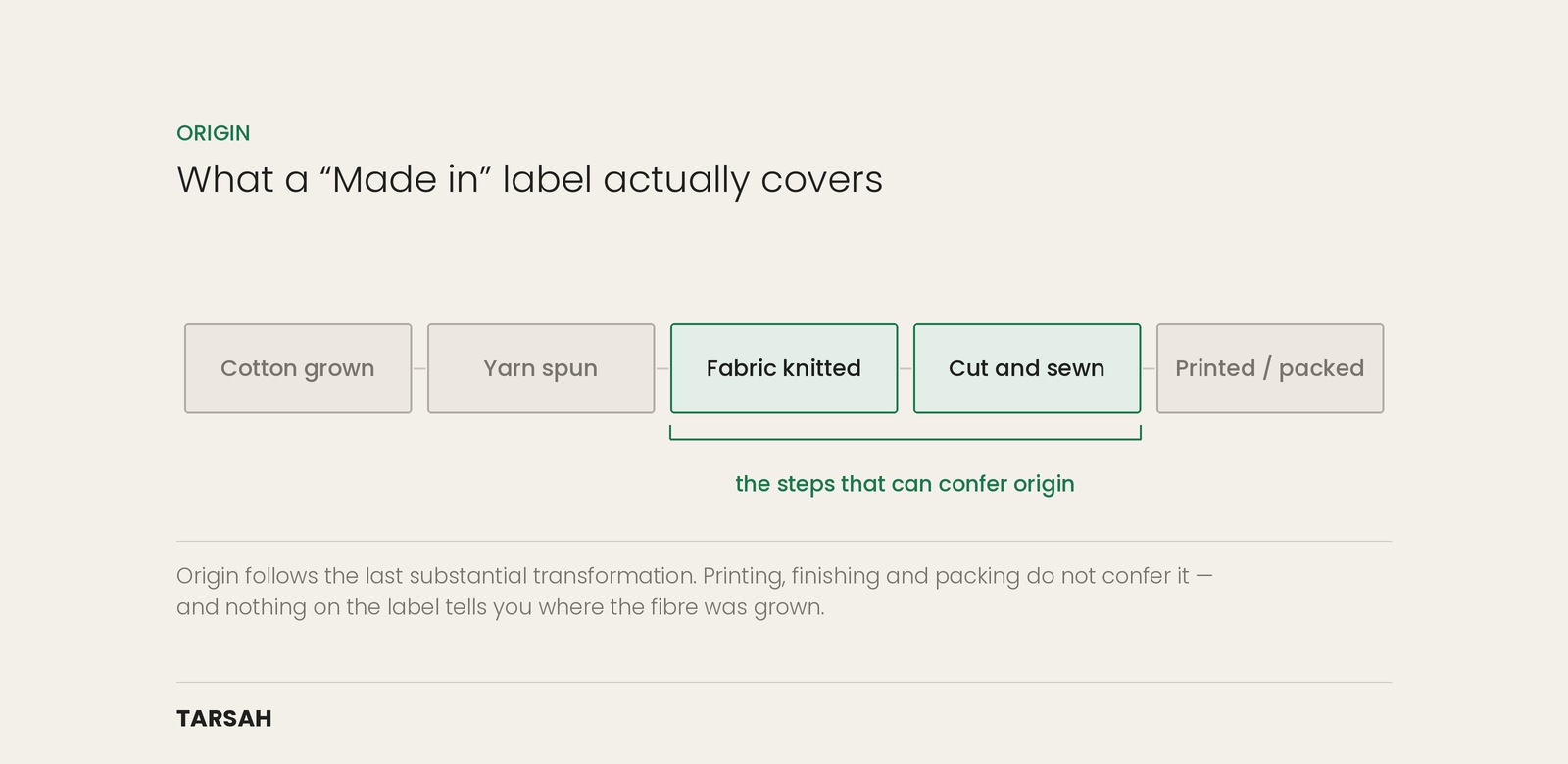
We build our tees in the mid-to-heavy range, using long-staple, high-count cotton, made in Egypt, with no synthetic blend. Enough weight to hang properly on the shoulder, and enough fibre quality that the weight still means something on wash fifty.
Because a number on a spec sheet is only worth anything if the shirt is still around to prove it.
Find your weight
Every Tarsah tee lists its fabric weight and cotton type on the product page — no guessing, no fine print.