

What actually changes when you size up
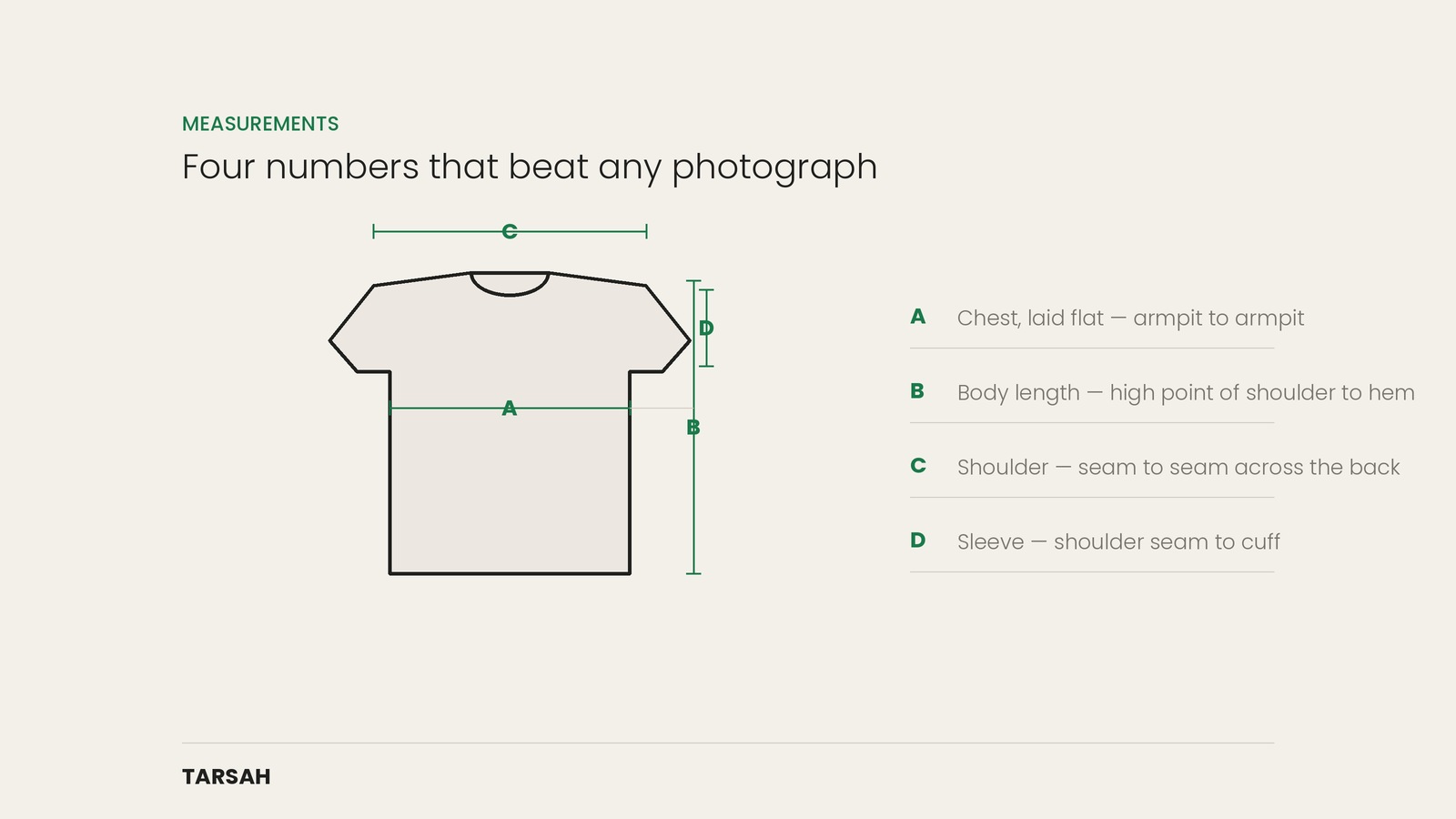
A size run is a grade. Every measurement in the pattern steps up together by a fixed increment — chest, yes, but also body length, sleeve length, shoulder width and the neck opening.
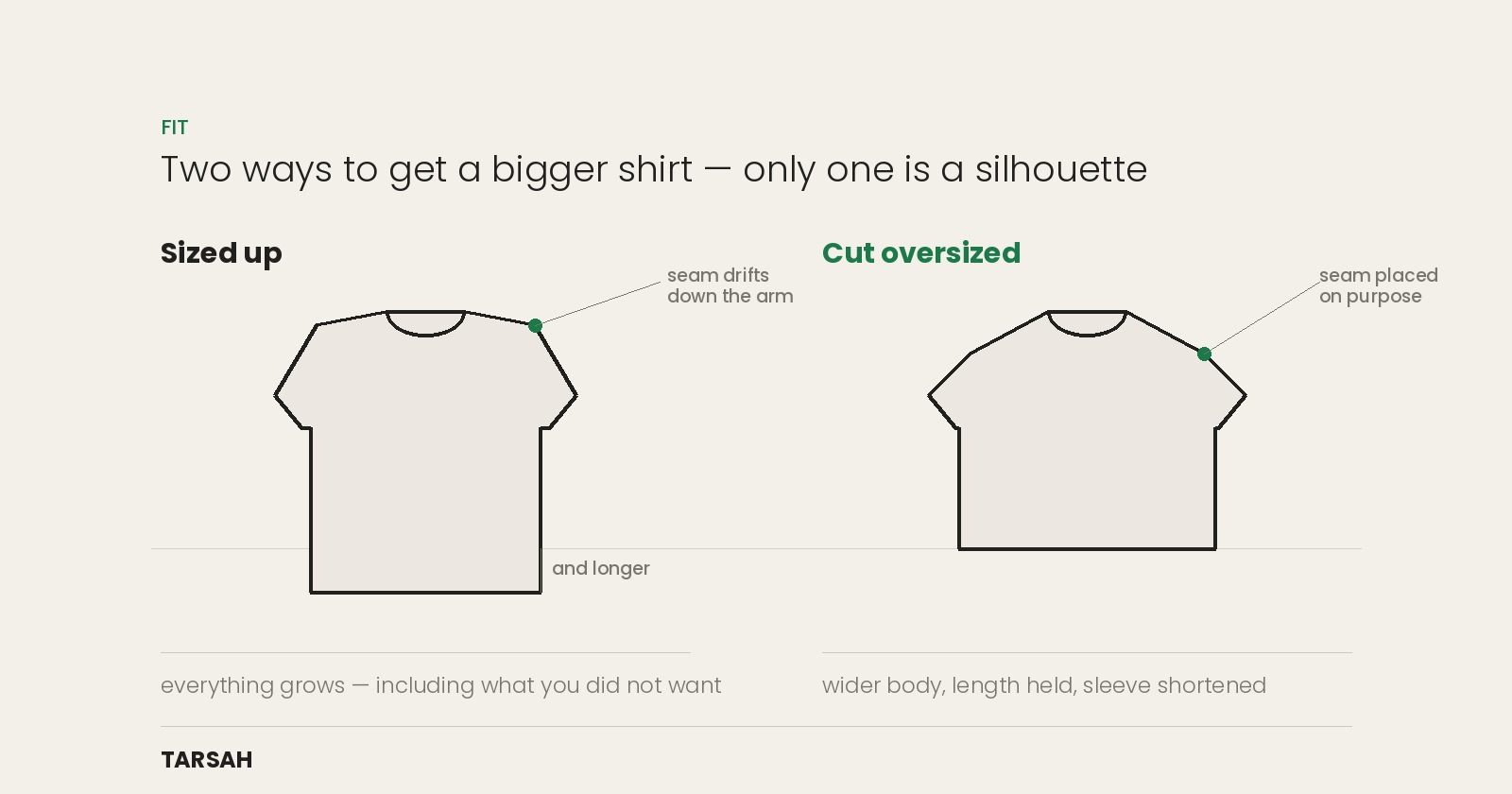
So you wanted a bit more room through the middle, and you also bought two extra centimetres of sleeve and a hem that now sits lower on your hip. Nothing is wrong with the shirt. It is just a bigger version of a shape that was drawn for someone bigger.
What a true oversized cut does instead
An oversized pattern is drawn from scratch, and it moves specific measurements in specific directions:
- The shoulder seam is dropped on purpose, so it sits down the arm as a design line rather than by accident.
- The body widens noticeably through the chest and hem.
- The length is held, or barely moves, so the proportion stays deliberate.
- The sleeve often gets shorter relative to the width, which is what stops it reading as a hand-me-down.
That combination is why an oversized medium looks intentional and a sized-up large just looks large.
The tell is where the shoulder seam sits
On a sized-up shirt the shoulder seam drifts somewhere down your upper arm and the sleeve cap bunches slightly, because that seam was drawn to sit on a shoulder bone it is no longer near.
On a well-cut oversized shirt the seam sits at a chosen point and the sleeve hangs clean off it. Same rough position on your body. Completely different in the mirror.
When sizing up is still the right call
Plenty of the time, honestly.
If you are between sizes, size up. If you want a little breathing room without changing the silhouette, size up. And if you are tall, size up — many oversized cuts are deliberately short in the body, which is exactly wrong for a long torso.
The mistake is not sizing up. It is sizing up while expecting a silhouette that only comes from a different pattern.
Where Tarsah lands
We draft our patterns in 3D before anything is cut, which means a fit is a shape we decided on rather than a smaller shape scaled until it fits.
Sizes grade. Silhouettes get designed. Those are two different jobs, and conflating them is how a wardrobe fills up with shirts that are technically your size and never quite right.
Find the shape first
Work out the silhouette you actually want, then pick the size — not the other way round. Our fit guide walks through the options.